The Lighting Mistake That's Making Your Home Yoga Corner Feel Wrong
Quick Answer: Bright, harsh overhead lighting is one of the most overlooked reasons a home yoga corner feels clinical rather than calming — switching to warmer, lower, indirect light sources (a lamp, string lights, or dimmer) makes the same physical space feel meaningfully more like a practice than a chore.
You set up the mat, the props, even a small plant, and the corner still feels more like a spot you avoid than a spot you’re drawn to. Before rearranging furniture again, check the lighting — it’s doing more emotional work in that space than most people realize.
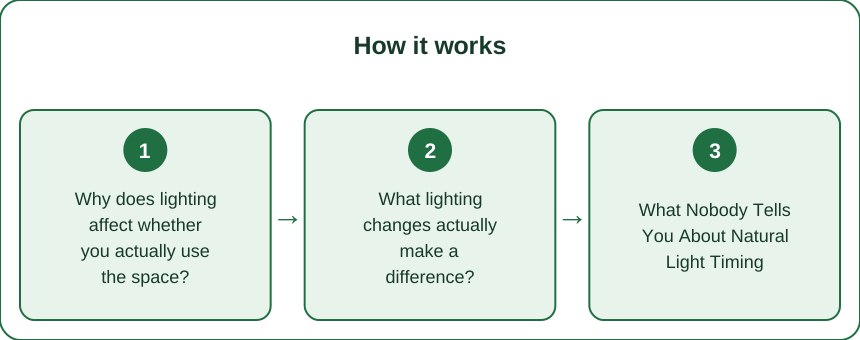
Why does lighting affect whether you actually use the space?
Bright overhead lighting (especially cool-toned ceiling fixtures) triggers alertness rather than the calmer, parasympathetic state most home yoga practice is trying to access, which creates a subtle mismatch between the room’s feel and the practice’s purpose. This is the same reason spas and yoga studios almost never use harsh overhead lighting.
Over time, that subtle mismatch can make the corner feel like ‘just another part of the room’ rather than a distinct, purpose-built space — which lowers the psychological pull to actually go use it regularly.
What lighting changes actually make a difference?
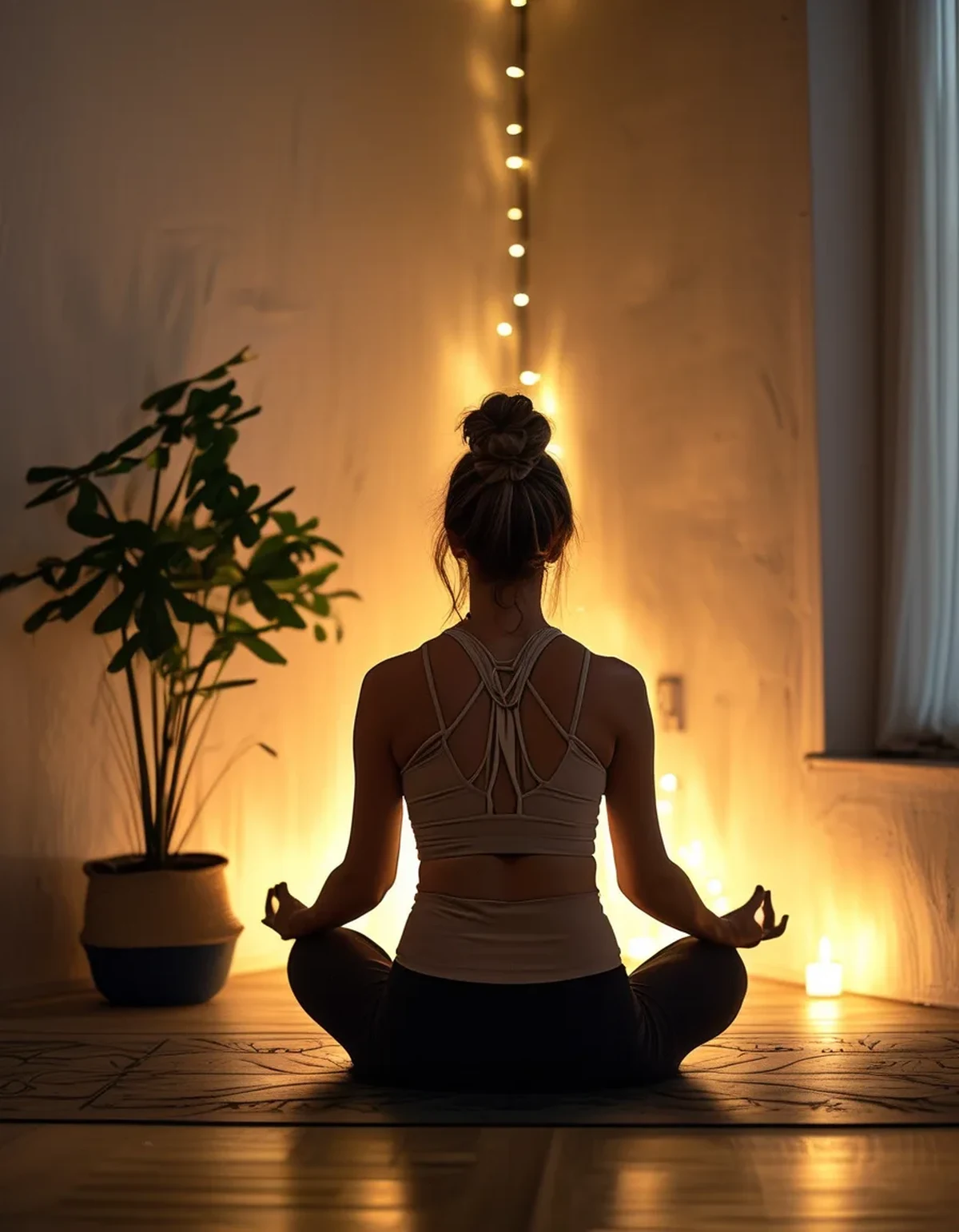
A single warm-toned lamp at a lower height than overhead lighting, positioned so it doesn’t create glare directly in your eyeline during poses, does most of the work — you don’t need an elaborate setup. Battery or plug-in string lights along a wall or shelf edge are a popular low-cost addition that adds ambiance without requiring an electrician or rewiring.
A dimmable option, even a simple plug-in dimmer switch for a lamp, lets you match the lighting to the time of day and mood of the practice — brighter for an energizing morning flow, dimmer for an evening wind-down session.
What Nobody Tells You About Natural Light Timing
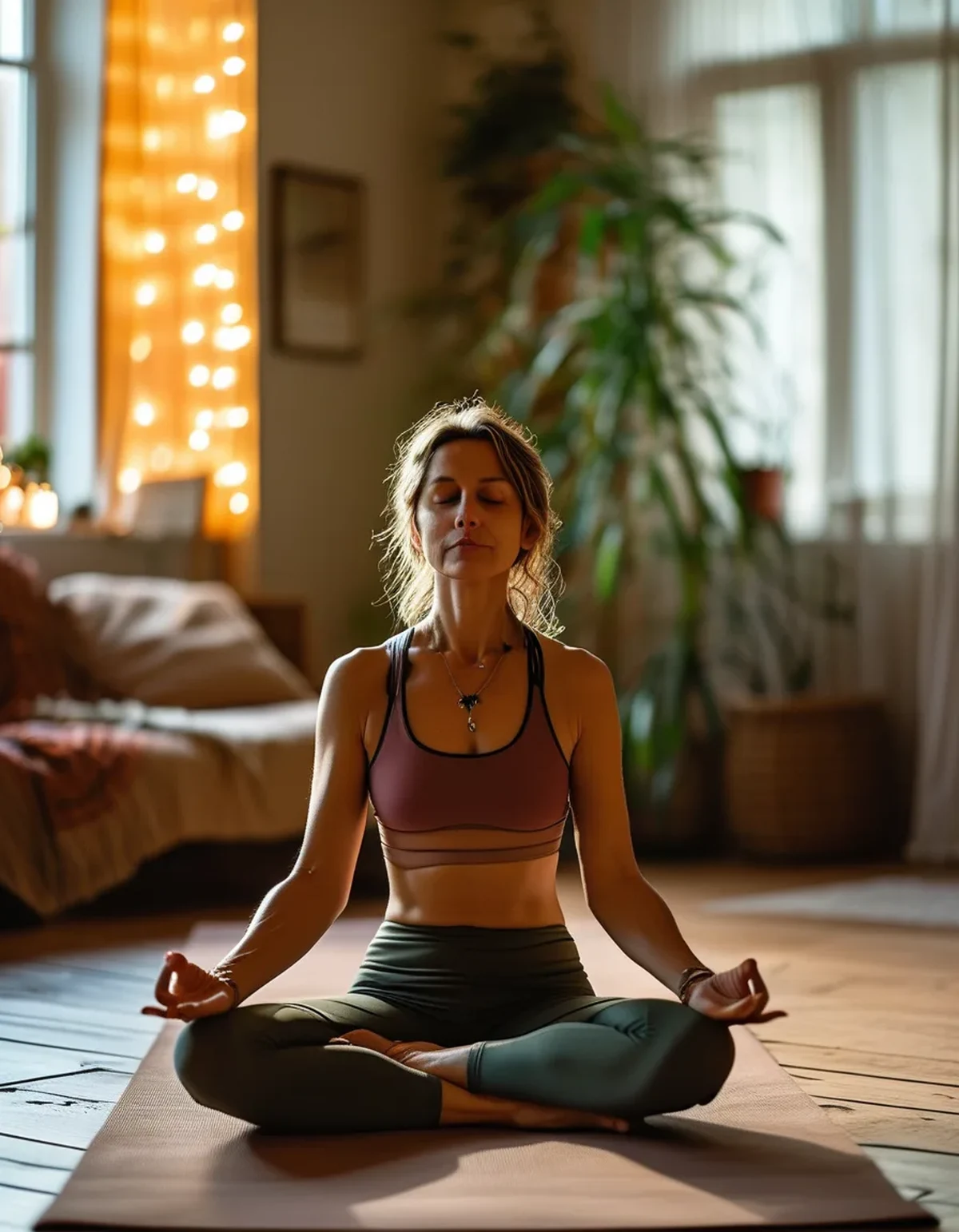
If your corner gets natural window light, the time of day you practice interacts with that light in ways worth planning around — a corner that’s beautifully lit at 7am might be harshly bright and hot by 2pm, or completely dark by 6pm in winter, meaning the same physical setup needs a lighting backup plan for different practice times. Many people set up their corner once and don’t realize the lighting only ‘worked’ for the specific time they tested it.
Sheer curtains rather than blackout ones let you soften harsh midday sun without losing the space entirely to darkness, which is a small adjustment that extends when the space feels usable across the day.
5 Signs Lighting Is Working Against Your Practice Space
1. You instinctively turn on overhead lights and immediately feel the space shift to ‘chore mode.’
2. Glare from a window or bulb sits directly in your eyeline during common poses.
3. The space feels fine in photos but flat or clinical in person.
4. You practice better at a studio or class than at home, unrelated to instruction quality.
5. The corner looks and feels identical to the rest of the room rather than distinct.
FAQ: Home Yoga Lighting Questions, Answered
Do I need to spend a lot on lighting to fix this?
No — a single warm-bulb lamp or a strand of plug-in string lights, both inexpensive, typically make a noticeable difference on their own.
Is warm or cool light better for a yoga corner?
Warmer tones (soft white, around 2700-3000K) generally support the calmer feel most home practice spaces are going for, compared to cooler daylight-toned bulbs.
Should lighting be different for morning versus evening practice?
Ideally yes — brighter, cooler light can suit an energizing morning session, while dimmer, warmer light suits an evening wind-down, which is where a simple dimmer adds real flexibility.
TL;DR:
- Harsh overhead lighting creates alertness that works against a calming practice space
- A single warm lamp or string lights, positioned to avoid glare, does most of the work
- Natural light changes through the day, so plan for more than one lighting scenario
- If the space photographs well but feels flat in person, lighting is the likely culprit.
See It in Motion
Seen here: Crewneck Short Sleeve Workout T-Shirt — shop it on bubblelime.com
Keep Reading
This article is for general informational and styling purposes only. Fit, sizing, and product availability may vary.