Why Your Home Yoga Corner Needs a Different Setup in the Evening
Quick Answer: Morning practice wants brightness, space to move and a clear head; evening practice wants low warm light, warmth, and sound insulation from the rest of the household. Using an identical setup for both means one of them is compromised. The two changes that matter most are lighting — a low lamp instead of an overhead — and temperature, since evening practice is usually slower and you cool down faster.
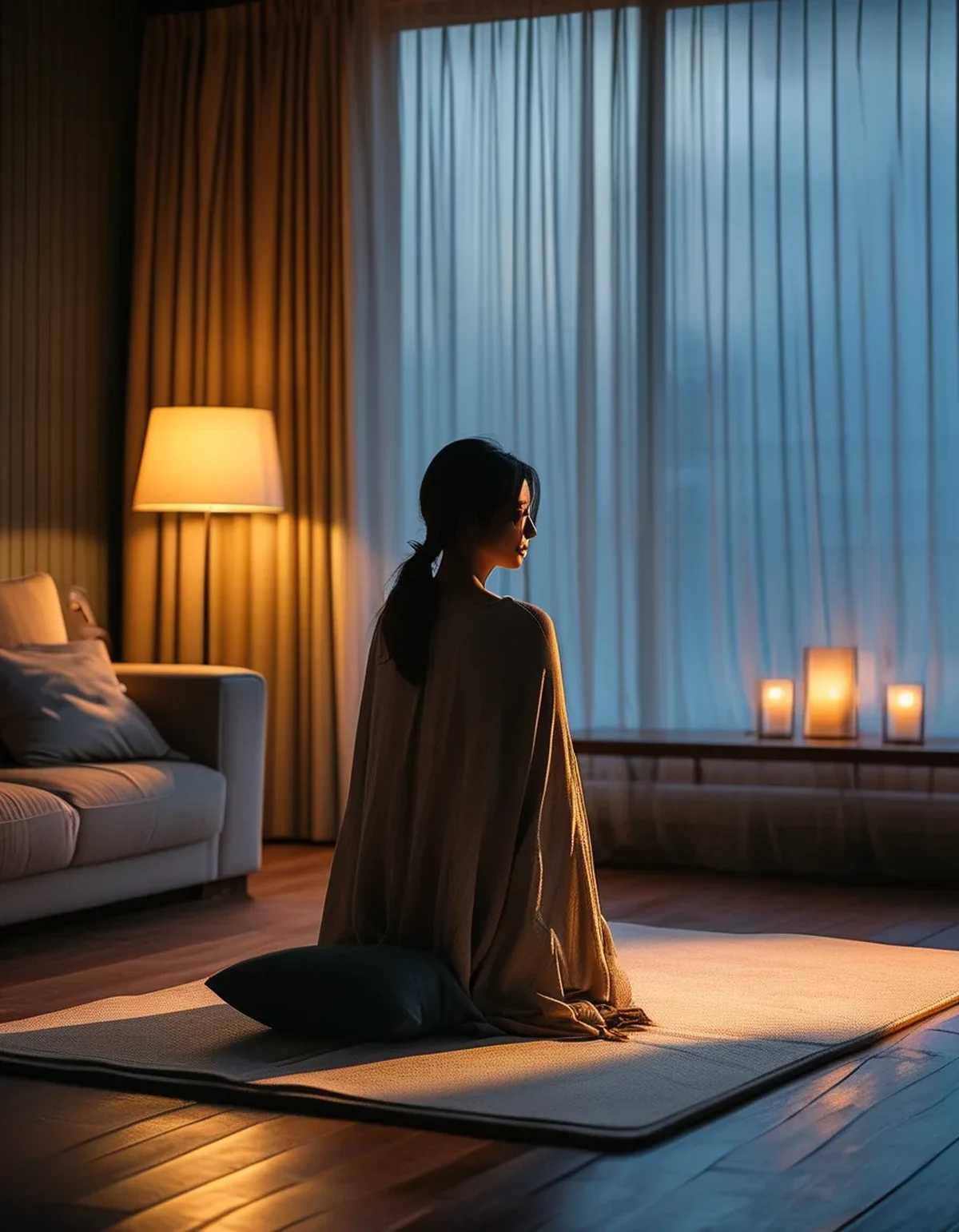
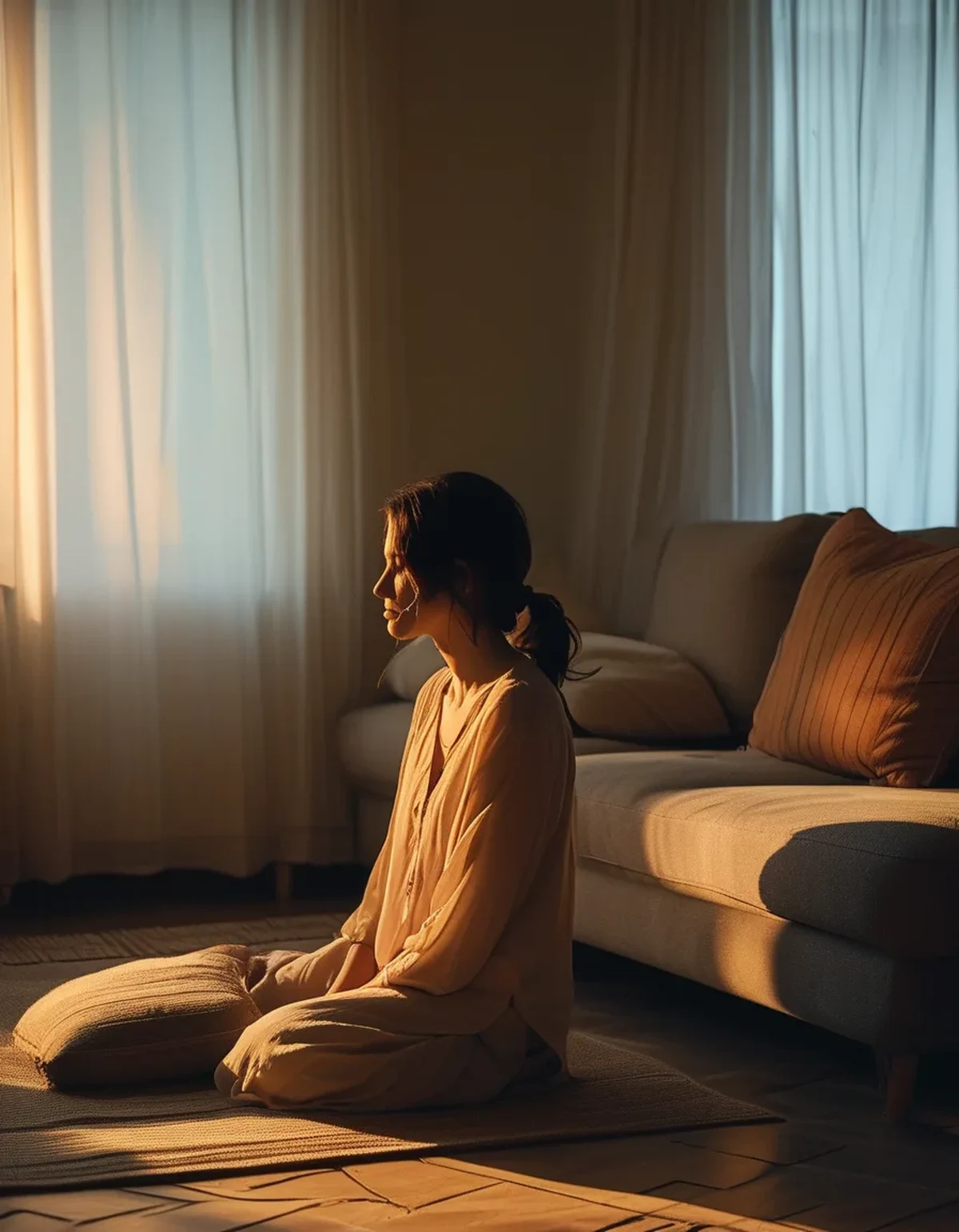
Same corner, two configurations.
What actually differs between morning and evening practice?
The intent is different. Morning practice tends toward mobilising and energising; evening practice tends toward downregulating. The physical demands, and therefore the space demands, follow from that.
Body temperature and stiffness differ. People are stiffest in the morning and most mobile in the late afternoon and evening, so evening sessions can go deeper with less warm-up but cool down faster once still.
Light availability changes everything. In summer both sessions had natural light; by October the evening session is entirely artificial, and most homes only have overhead lighting in the relevant rooms.
Household noise is at its peak in the evening. Morning practice often happens in a quiet house; evening practice competes with televisions, conversations and kitchens.
How should the lighting change?
Overhead lighting is the single worst thing for an evening practice. It creates harsh shadows, it signals activity rather than rest, and bright light exposure in the evening suppresses melatonin and delays sleep.
One low lamp is enough. Placed to the side, at floor or table height, warm-toned. This alone transforms how the corner feels after dark.
Candles work and carry an obvious caveat. If you use them, keep them well away from the mat and from anything that moves.
Dimmable is worth the small cost. A smart bulb in an existing lamp is the cheapest way to make one corner work for both sessions.
For morning, do the reverse. Bright light, ideally near a window, has a genuine effect on alertness and on circadian timing, and morning light exposure is one of the more evidence-backed daily habits available.
What about temperature and comfort?
Evening practice cools you down faster because it is usually slower and involves more time held still, and because the house is often cooling too.
Add a layer to the corner permanently. A folded blanket kept with the mat, used over the body in the final resting position, removes the most common reason people cut evening practice short.
Socks and a long-sleeve layer for the final ten minutes make more difference than any prop.
Avoid practising directly under a heating vent or beside a cold external wall. Both create uneven temperature across the body, which is distracting in exactly the part of practice meant to be still.
A slightly warmer room suits evening practice than morning, which is the opposite of what most heating schedules do.
What Nobody Tells You About Evening Home Practice
The teardown decides whether tomorrow happens. A corner packed away each night is a corner used less each week. If the mat can stay out — even rolled and standing in place — the habit survives far better.
Sound matters more than at any other time. Evening household noise is unpredictable in a way morning noise is not, and headphones or a simple sound source do more for evening practice than any physical change to the space.
Scent works as a signal, and it works quickly. A single consistent scent used only for practice becomes a cue within a couple of weeks. It is one of the fastest habit anchors available and costs almost nothing.
The phone is the actual problem. Evening practice competes with the phone in a way morning practice does not, because evening is when the phone is most rewarding. Leaving it in another room is the intervention; putting it face down is not.
Practising near where you sleep helps and has a limit. Proximity supports the wind-down, and practising in the bedroom itself can weaken the association between that room and sleep for people who already struggle with it.
And the seasonal one: as evenings darken, the same 8pm feels much later than it did in July. Practice times that worked all summer often need moving forward by half an hour in autumn, and people usually stop practising rather than making that adjustment.
FAQ: Evening Yoga Space Questions, Answered
How close to bedtime is too close?
Gentle, slow practice right up to bedtime suits most people and often helps sleep. Vigorous practice within an hour of bed raises core temperature and heart rate and can delay sleep onset.
Do I need a separate space for evening practice?
No — a different configuration of the same space is enough. Lighting and a blanket cover most of it.
What if the only quiet time is after everyone is asleep?
That works, with two adjustments: keep it entirely quiet and low-impact, and keep it shorter than you would otherwise. A consistent 15 minutes beats an occasional 45.
TL;DR:
- Morning and evening practice have different intents and need different setups.
- Swap overhead lighting for one low warm lamp — the highest-impact single change.
- Keep a blanket and a warm layer permanently with the mat; evening practice cools you fast.
- Leave the mat out. Teardown is what kills the habit.
- Use a consistent scent and a sound source as evening cues, and move the phone to another room.
One corner, two settings. Switching between them takes about a minute.
See It in Motion
Seen here: UPF 50+ Short Sleeve Rashguard Swim Shirt — shop it on bubblelime.com
Keep Reading
This article is for general informational and styling purposes only. Fit, sizing, and product availability may vary.