How to Keep a Home Yoga Corner From Turning Back Into Storage (Even in a Multipurpose Room)
Quick Answer: A yoga corner loses to storage because nothing marks it as off-limits for other stuff — a simple physical boundary (a rug, a small shelf, taped floor lines) and a strict “mat stays rolled out” rule protect the space far better than good intentions alone.
The corner started as a dedicated yoga space in week one. By week three, there’s a laundry basket in it. This isn’t a willpower problem — it’s a boundary problem, and boundaries need to be physical, not just mental.
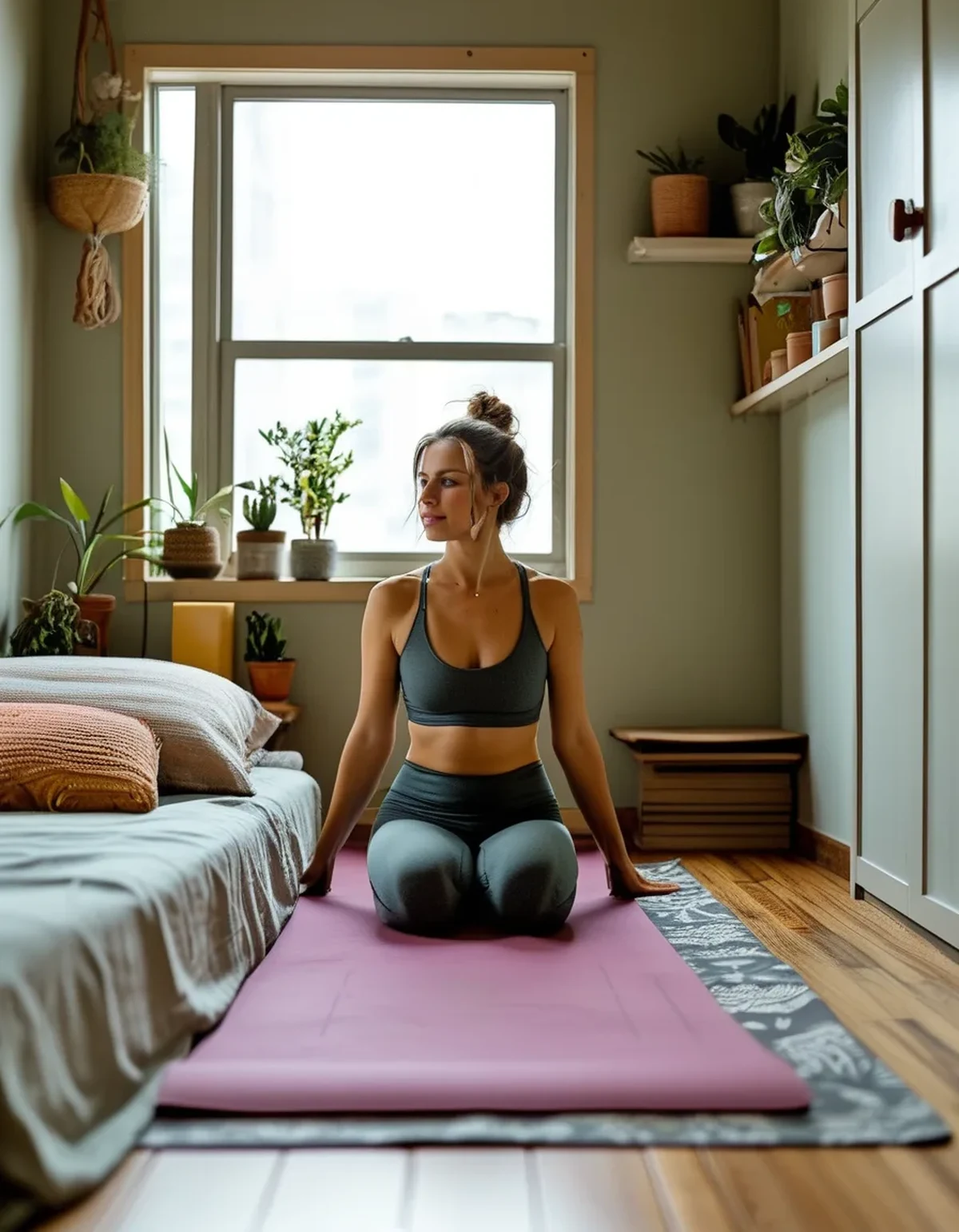
Why does a yoga corner lose out to storage so predictably?
Without a clear physical marker, an empty corner in a shared room reads as “available space” to anyone (including yourself) looking for somewhere to set something down temporarily — and temporary placements become permanent fast without an active reason not to.
What actually creates a real boundary for the space?
A distinctly different rug or mat texture underfoot signals “this is a different zone” more effectively than an invisible mental boundary. Even simple washi tape lines on the floor marking the space work surprisingly well as a low-cost visual cue that discourages casual item-dumping.
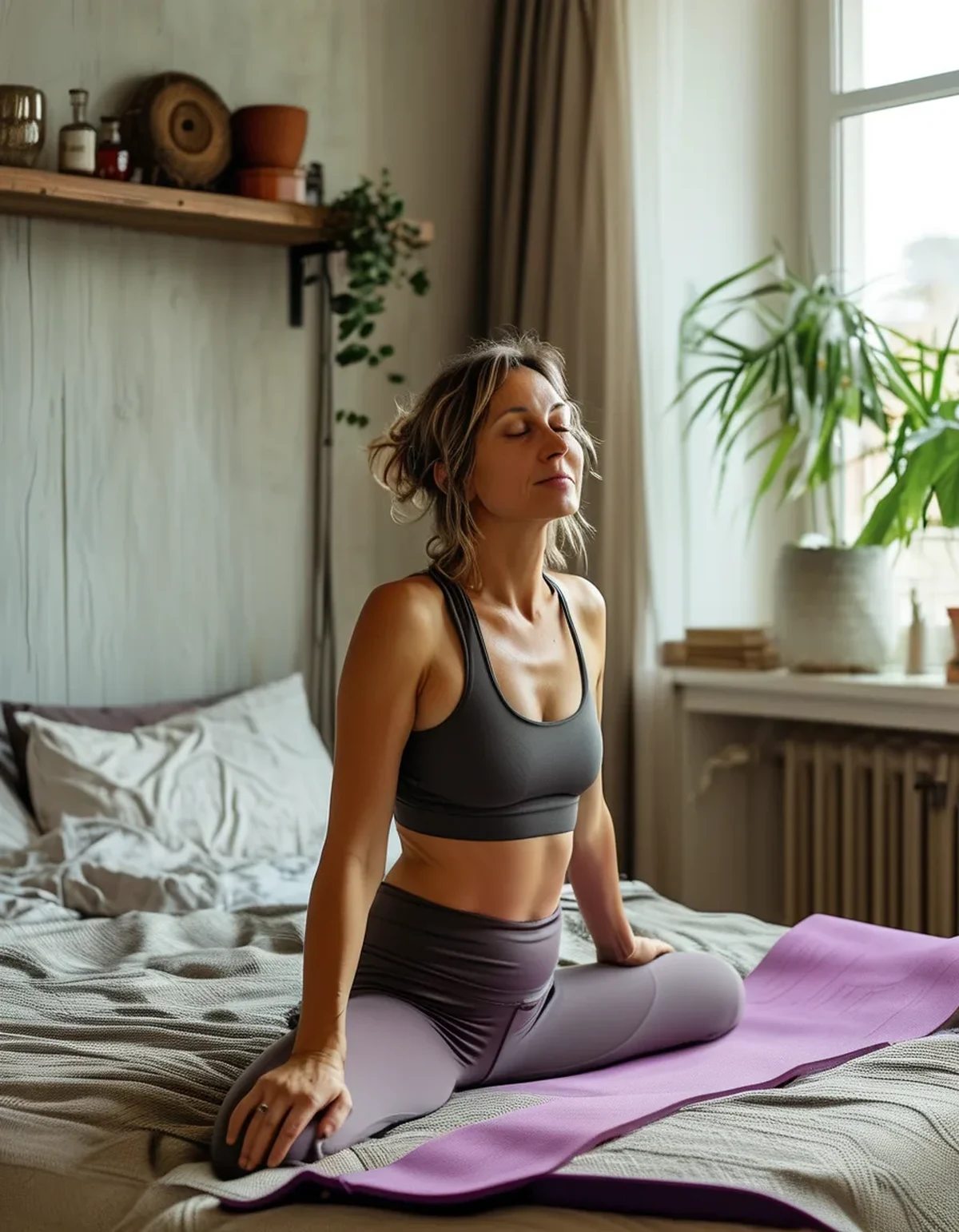
Does keeping the mat rolled out versus stored away matter?
Significantly — a rolled-out mat is a visible, active claim on the space that reads as “in use,” while a stored mat leaves the corner looking empty and available. The extra effort of unrolling and re-rolling daily is exactly what makes storage items feel like they don’t belong there.
Myth vs Fact: Home Yoga Corners
Myth: A dedicated yoga corner just requires enough discipline to protect. Fact: Discipline fades under daily life pressure — physical markers (rugs, tape, a small shelf) protect the space with far less ongoing willpower required.
Myth: Any small empty space works as a yoga corner. Fact: A corner with no visual distinction from surrounding storage areas gets treated the same way as those areas — a distinct visual boundary matters more than square footage.
Myth: A multipurpose room can’t sustain a real practice space. Fact: It can, with the right boundary markers — the room being shared isn’t the problem, the lack of a defined zone within it is.
FAQ: Home Yoga Space Questions, Answered
What’s the cheapest way to mark a yoga corner boundary?
Washi tape outlining the space on the floor costs almost nothing and is surprisingly effective at discouraging casual item placement compared to no marker at all.
Should the yoga mat stay rolled out between practices?
Yes, if space allows — a visibly in-use mat protects the corner far better than a stored one, since an empty-looking space reads as available for other things.
Can a yoga corner work in a room that’s also used for other daily activities?
Yes — the shared use isn’t the actual obstacle; a clear, distinct physical boundary within the room is what makes it hold up over weeks, not the room’s other functions.
TL;DR:
- A yoga corner without a physical boundary reads as available storage space
- Rugs, floor tape, or a small shelf create the boundary that discipline alone can’t
- Keeping the mat visibly rolled out protects the space better than storing it away
- Shared rooms can sustain a real practice corner with the right markers
The fix is a physical boundary, not more willpower.
See It in Motion
Seen here: Crewneck Short Sleeve Workout T-Shirt — shop it on bubblelime.com
Keep Reading
This article is for general informational and styling purposes only. Fit, sizing, and product availability may vary.