How Your Floor Type Changes Your Home Yoga Practice
Quick Answer: Carpet makes balance poses noticeably harder because the surface deforms under your foot, and it makes a thin mat feel unstable in plank and downward dog. Hardwood is the best all-round surface but the least forgiving on knees. Tile is grippy and cold. Concrete is hard enough that mat thickness becomes a genuine consideration. Match the mat to the floor, not to the reviews.
If balance poses feel inexplicably harder at home than in the studio, look down before you blame your practice.
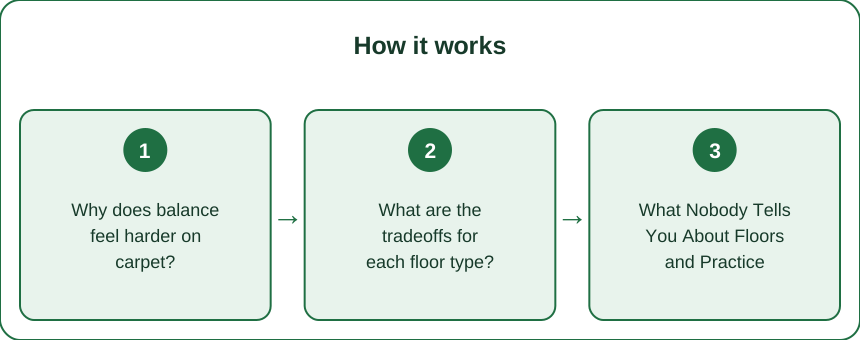
Why does balance feel harder on carpet?
Because a stable base requires a surface that does not move, and carpet moves.
When you stand on one foot, dozens of small muscles in the foot and ankle make continuous micro-adjustments based on feedback from pressure receptors in the sole. On a firm surface, that feedback is clear and immediate. On carpet, the surface compresses unevenly under your foot and continues shifting, so the feedback is noisy and the corrections lag.
The practical effect: tree pose, warrior three, half moon and any single-leg balance are genuinely harder on carpet, especially thick or plush carpet. This is not a fitness deficit.
What helps:
- A firmer, thinner mat rather than a cushioned one. Stacking softness on softness compounds the problem. A 3mm mat on carpet is more stable than a 6mm one.
- A hard board or a piece of plywood under the mat for balance-heavy practices. Unglamorous, extremely effective.
- Practicing balance poses near a wall. Not as a crutch — as a way to work the actual balance skill without the surface noise dominating.
The upside of carpet: kneeling poses, floor work, restorative practice and anything with a knee or hip on the ground are considerably more comfortable. If your practice is mostly yin, restorative or floor-based, carpet is an asset rather than a problem.
What are the tradeoffs for each floor type?
Four surfaces, four distinct profiles.
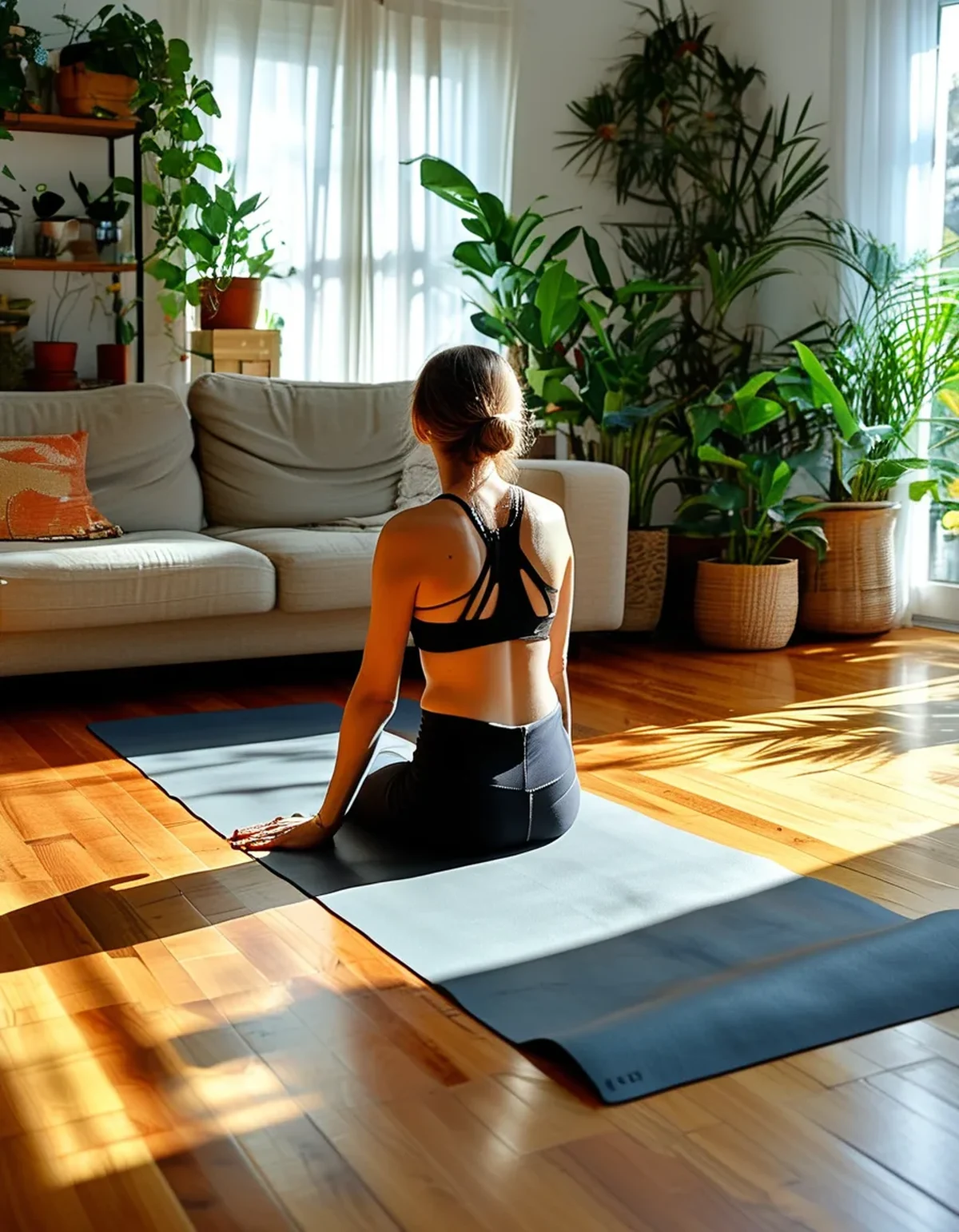
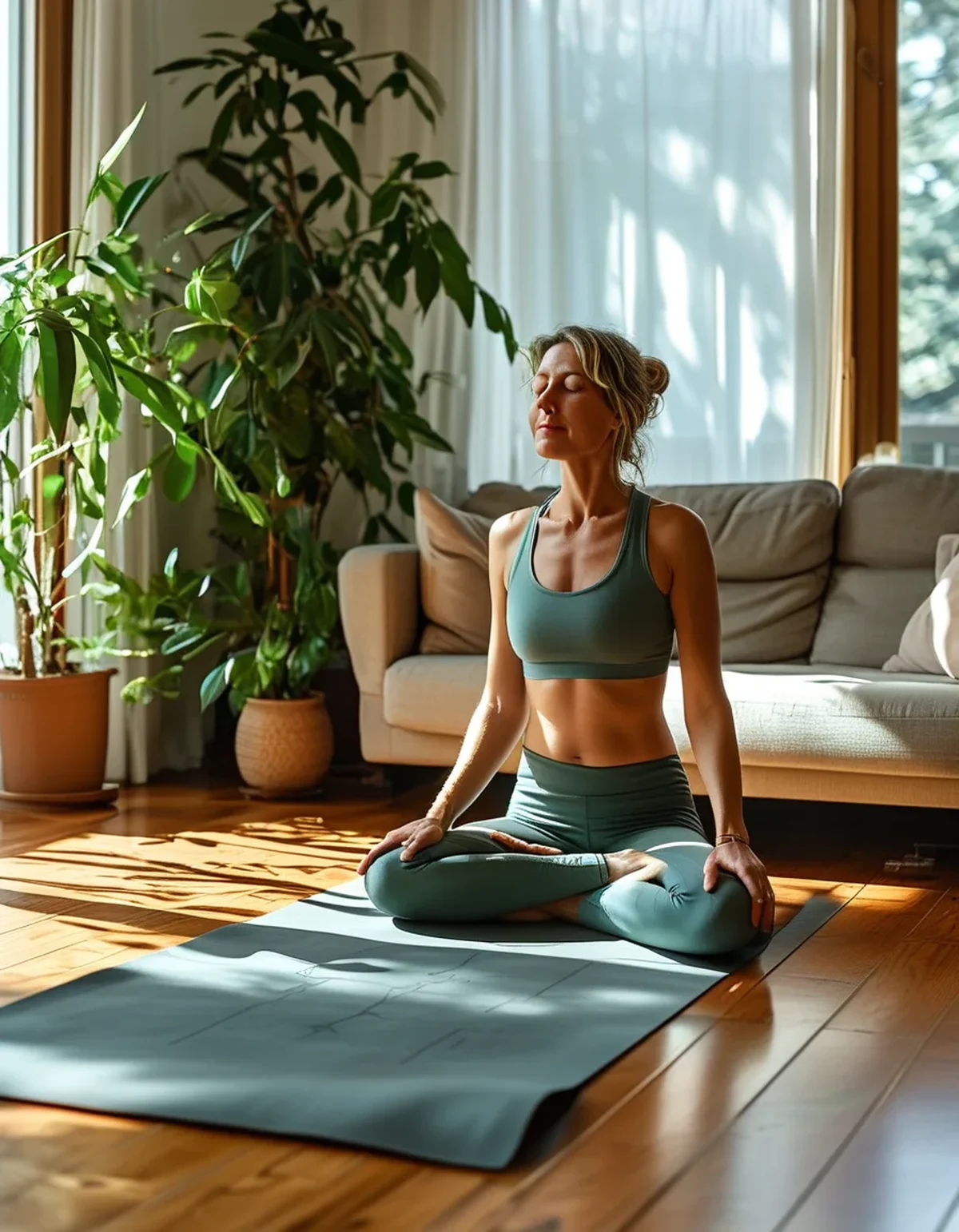
Hardwood. The best general-purpose yoga surface. Firm enough for clean balance feedback, enough grip through a mat to prevent sliding, and forgiving enough that it does not feel punishing. The downside is knee comfort in kneeling poses, which a folded blanket solves entirely. Watch for mats sliding on very smooth polyurethane finishes — a mat with a textured underside matters here.
Tile. Firm and stable, generally good grip under a mat, and cold, which some people love and some find unpleasant in a slow practice. The hardness is comparable to hardwood but usually less forgiving because of the grout lines, which can be felt through a thin mat.
Concrete, sealed or in a basement or garage. The hardest surface, and the one where mat thickness genuinely matters. A 6mm mat, or a thin mat over a fitness mat, is a reasonable setup here. Cold is a real factor — concrete stays cool year-round and pulls heat out of a body lying on it, which is fine in August and unwelcome by November.
Carpet. Comfortable for floor work, difficult for balance and for pushing poses like plank and chaturanga where a soft base absorbs force you want to press against. Low-pile carpet is much better than plush.
Area rug over hardwood. The worst of both if the rug slides, and quite good if it does not. A rug pad is the fix, and it takes ten minutes.
What Nobody Tells You About Floors and Practice
Your mat and your floor are one system, not two purchases. A mat that is excellent on a studio’s hardwood can be genuinely bad on your bedroom carpet. Reviews almost never mention what the reviewer was practicing on, which is why mat recommendations are so inconsistent.
Sliding is usually the floor, not the mat. If your mat travels forward in downward dog, the friction failing is between the mat and the floor, not between your hands and the mat. A rug pad, a yoga towel underneath, or simply a different room solves it faster than a new mat does.
Sweat changes everything about grip. A mat that is perfectly grippy in a cool room becomes slippery once your hands sweat, and late summer makes this much worse. Natural rubber and cork mats improve their grip when damp; PVC mats get worse. If you practice in a warm room in August, this is the most important mat property and almost nobody selects for it.
Cold floors change what your practice can be. A concrete basement in winter makes long holds and savasana genuinely unpleasant. A rug, a blanket, or moving the practice to a different room in cold months is a legitimate seasonal adjustment rather than a lack of discipline.
And the practical one: the floor you practice on is usually not negotiable, and that is fine. Every surface has an adaptation. The people who struggle are the ones who never realized the surface was a variable at all.
How do you choose a mat for the floor you have?
Four decisions, in the order that matters.
1. Thickness, set by floor hardness. On concrete or tile, 5 to 6mm. On hardwood, 4 to 5mm. On carpet, 3 to 4mm — thinner, because you already have cushioning and you need firmness. Choosing thickness by personal preference rather than by floor is the most common mismatch.
2. Underside texture, set by floor slipperiness. Smooth polished floors need a mat with a genuinely textured or rubber underside. On carpet, the underside barely matters because carpet grips almost anything.
3. Top surface, set by how much you sweat. For a warm room or a vigorous practice, natural rubber, cork or a polyurethane top layer hold grip when damp. For a slow practice in a cool room, almost anything works.
4. Weight, set by whether the mat lives out or gets stored. A dense rubber mat that stays put is excellent and heavy. If yours has to go in a closet after every practice, weight is what determines whether you actually use it — and the mat that gets used beats the mat that performs better.
A cheap test before buying anything: do three downward dogs and one full minute of tree pose on your current setup, and note specifically whether the problem is sliding, instability, or discomfort. Those three problems have three different solutions, and diagnosing which one you have saves a return.
One seasonal note: if your practice space gets direct afternoon sun, that patch of floor and mat can be considerably warmer than the room. In August this makes an otherwise fine setup unpleasant. Shifting the mat three feet is a real fix.
FAQ: Floor and Mat Questions, Answered
Can I practice yoga directly on carpet without a mat?
For gentle and restorative work, yes. For anything with weight through the hands or balance work, no — you lose too much stability and hands sink in awkwardly. Carpet also holds considerably more dust and allergens than a wiped mat surface.
Is a thicker mat always more comfortable?
No. Past about 6mm, most people lose meaningful stability in standing and balancing poses, and the comfort gain in kneeling can be achieved with a folded blanket used only where it is needed.
My mat slides on hardwood. What is the actual fix?
In order of cost: clean the floor and the mat underside, which fixes it surprisingly often; add a rug pad or yoga towel underneath; then replace the mat with a natural rubber one. Cleaning first is worth trying because polish and dust residue is the usual culprit.
Does it matter which direction I face in the room?
Only practically. Facing away from the strongest light source is easier on the eyes, facing a clear wall reduces distraction, and having enough space behind you for a step back matters more than orientation itself.
TL;DR:
- Carpet compresses unevenly, which genuinely makes balance poses harder — use a thinner, firmer mat or a board underneath.
- Hardwood is the best all-round surface; add a folded blanket for kneeling.
- Concrete and tile need more thickness and get cold in winter.
- Match mat thickness to floor hardness: 3 to 4mm on carpet, 5 to 6mm on concrete.
- Sliding is usually a mat-to-floor problem — clean both before buying anything.
- If you sweat, natural rubber and cork grip better when damp; PVC gets worse.
The floor is a variable most people never consider. Once you account for it, a lot of unexplained difficulty stops being unexplained.
See It in Motion
Seen here: Crewneck Short Sleeve Workout T-Shirt — shop it on bubblelime.com
Keep Reading
This article is for general informational and styling purposes only. Fit, sizing, and product availability may vary.