How Small Does a Home Yoga Space Actually Need to Be?
Quick Answer: A functional home yoga space needs about 6.5 x 4 feet — roughly one yoga mat plus 18 inches of clearance on each side for arm reach and standing poses. That’s smaller than most people assume, and it fits in a bedroom corner.
You’ve been telling yourself you’ll set up a real yoga space once you have a spare room. Here’s the math that removes that excuse: the actual minimum footprint is smaller than a twin mattress.
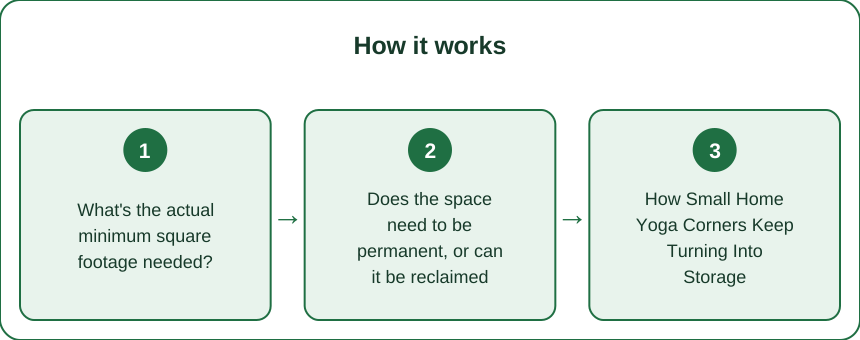
What’s the actual minimum square footage needed?
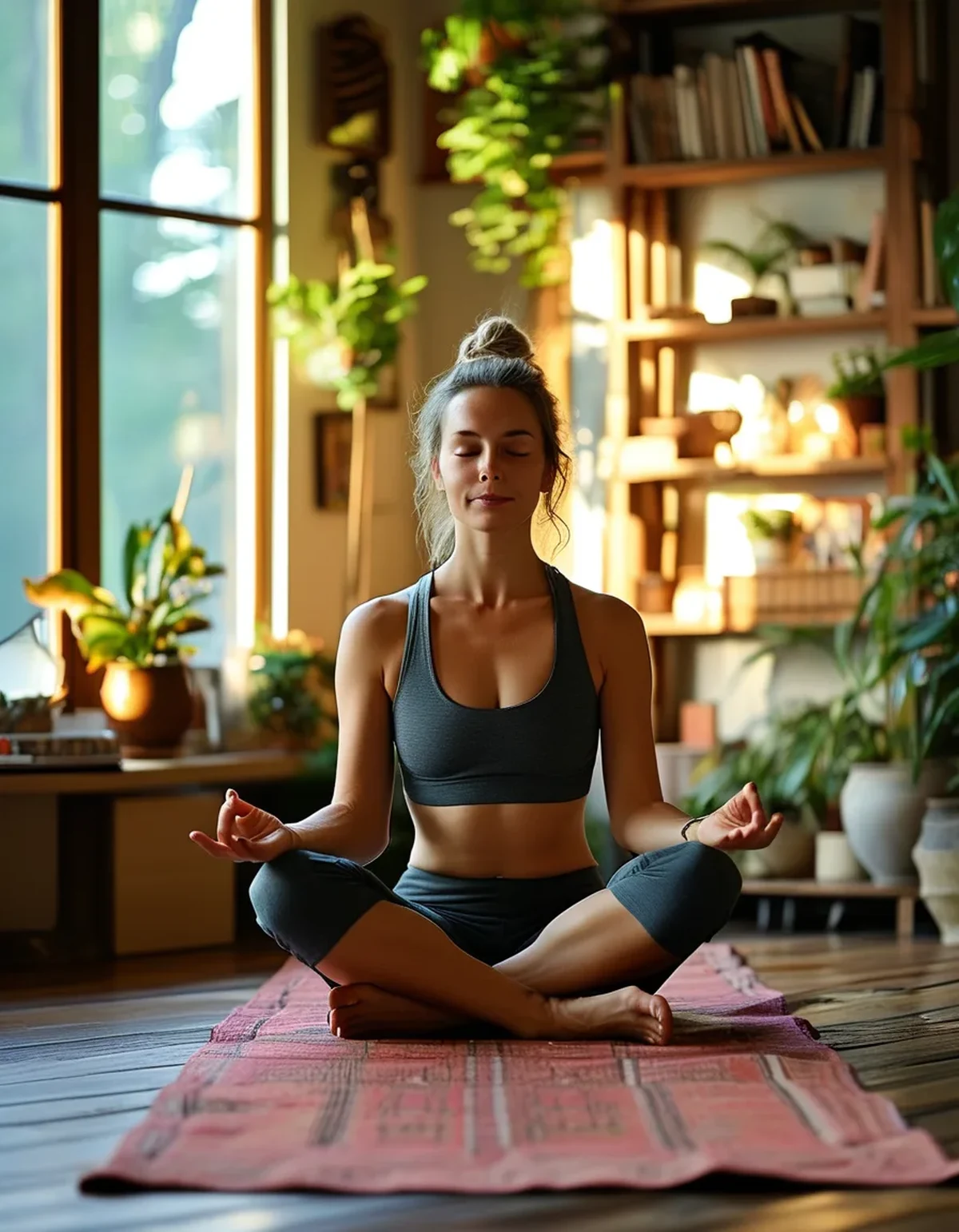
A standard yoga mat is about 2 x 6 feet. Add clearance for arm sweeps in poses like warrior 2 and triangle — roughly 18 inches on each long side — and the real minimum works out to about 6.5 x 4 feet, or 26 square feet. That’s a corner, not a room, and it comfortably fits most standing, seated, and floor sequences.
Overhead clearance matters too: aim for at least 7 feet if you plan to do any arm-overhead poses like upward salute without brushing a ceiling fan or low light fixture.
Does the space need to be permanent, or can it be reclaimed daily?
It can absolutely be temporary. A rolled mat that lives in a corner and unrolls onto cleared floor space for 20-30 minutes works exactly as well as a dedicated room, and this is actually how most consistent home practitioners operate — permanence isn’t what makes a habit stick, visibility and low setup friction are.
The key is keeping the unroll-to-start time under 30 seconds. If getting your space ready involves moving furniture every time, that friction quietly kills consistency faster than the space being small ever would.
How Small Home Yoga Corners Keep Turning Into Storage
The #1 reason small yoga corners fail isn’t lack of space — it’s that anything under about 10 square feet with no dedicated purpose becomes a magnet for random stuff (laundry baskets, boxes, whatever needs somewhere to go). A corner with a visible mat marker (even just the mat itself, always visible, never fully put away) resists this pull far better than an ‘empty’ corner that reads as available storage to your brain.
What actually needs to be in a small yoga space versus what doesn’t?
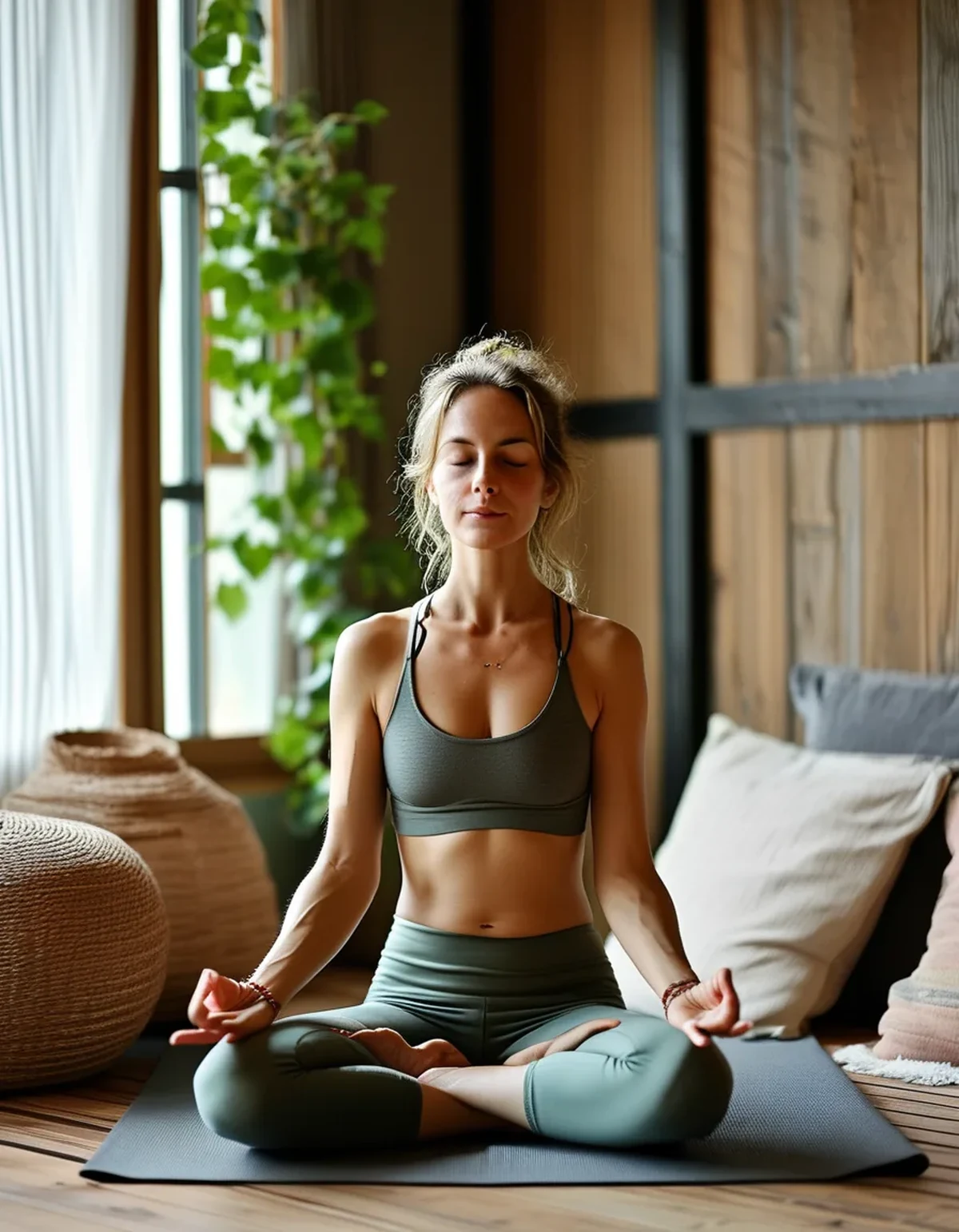
Essentials: the mat itself, and if floor space allows, one block within arm’s reach. That’s genuinely it for a functional practice.
Skippable for small spaces: a full prop wall, a dedicated bolster, a sound system. These add to a practice but their absence stops nobody — waiting to have ‘enough’ equipment before starting is a bigger practice-killer than a small footprint ever is.
Does natural light or a mirror actually matter for a small space?
Natural light helps mood more than it helps the practice itself — a bright corner, even a small one, gets used more consistently than a dim one in most people’s self-reported experience. A mirror is optional and genuinely more useful for alignment-focused practice than for beginners, who often find it distracting rather than helpful in a small space.
FAQ: Small Home Yoga Space Questions, Answered
Can you do yoga in a space smaller than a full mat?
A modified practice, yes — seated and gentle floor sequences can work in less space. But for standing poses with any arm extension, the 6.5 x 4 foot minimum is worth protecting if at all possible.
Where’s the best spot for a small home yoga corner?
Wherever gets used, not wherever looks best. A bedroom corner that’s actually walked past daily beats a designated ‘yoga room’ down a hallway that’s easy to forget about.
Do I need a yoga mat storage solution for a tiny space?
A simple wall hook or a basket the mat leans against works fine — the goal is under-30-second setup, not elegant storage. Function over form here specifically pays off in consistency.
TL;DR:
- The real minimum footprint is about 6.5 x 4 feet — a corner, not a spare room
- Temporary/reclaimed space works as well as permanent, if unroll time stays under 30 seconds
- A visible mat resists becoming a storage dumping ground better than an ‘empty’ corner does
- Skip the full prop wall — mat and one block covers a genuinely functional practice
The space was never the real barrier — it’s smaller than most people assume, and a corner that’s easy to reach beats a spare room that’s easy to forget.
See It in Motion
Seen here: Racerback Tank Top - White — shop similar styles on bubblelime.com
Keep Reading
This article is for general informational and styling purposes only. Fit, sizing, and product availability may vary.