Where to Actually Put Your Yoga Mat in a Small Apartment (It's Not Just 'Anywhere Flat')
Quick Answer: The best spot has natural light, a wall nearby for balance poses, and enough clearance for arm and leg extension in all directions (roughly 6x4 feet minimum) — not just any flat floor space. Consistent placement in the same spot also builds a stronger practice habit than moving the mat around.
A lot of small-apartment yogis default to whatever open floor space exists without thinking much about it, then wonder why practice feels cramped or inconsistent. The spot itself actually matters more than most people assume.
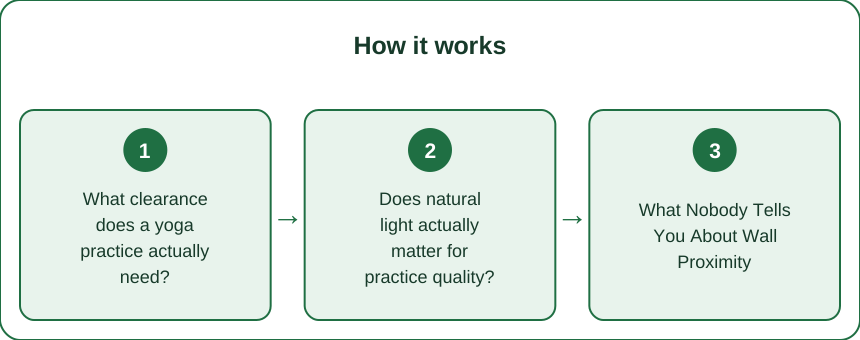
What clearance does a yoga practice actually need?
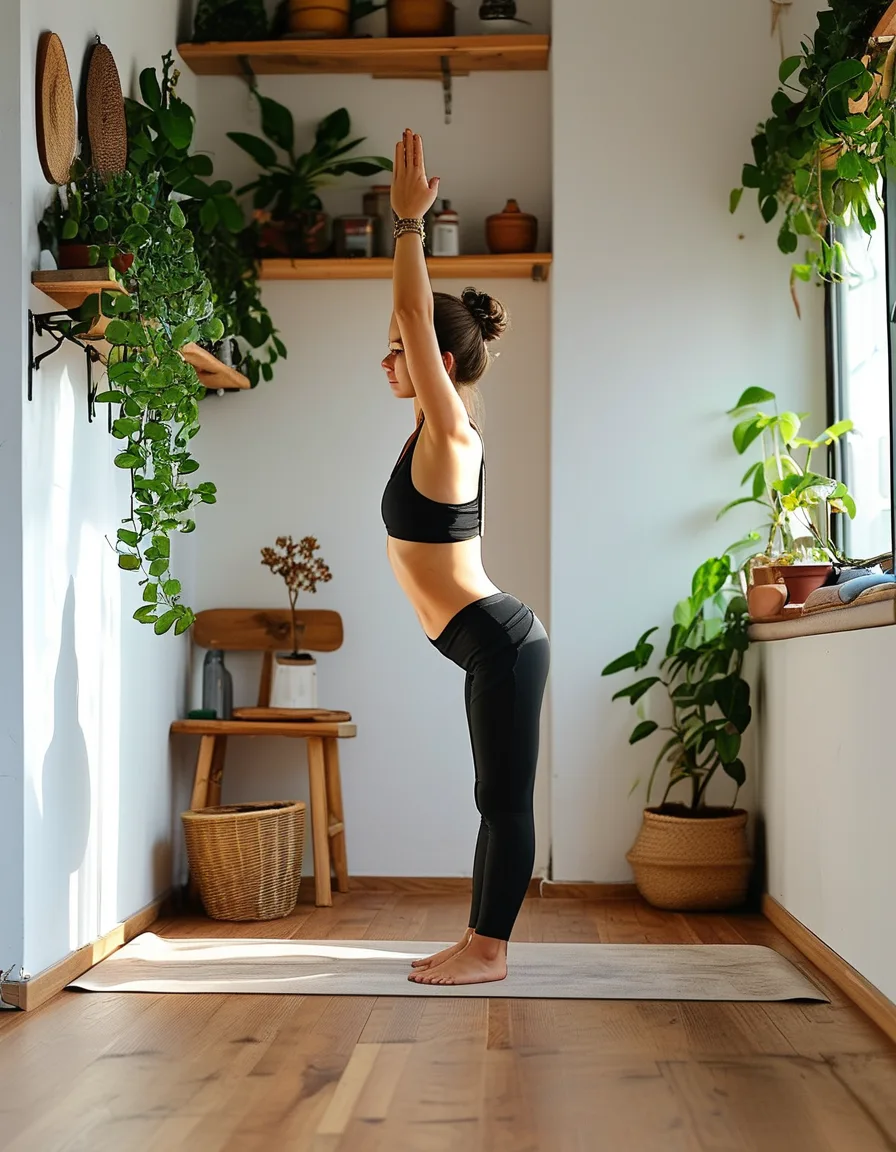
A safe minimum is roughly 6 feet by 4 feet of genuinely clear space — enough for full arm extension overhead, a wide-legged forward fold, and safe space for balance poses without hitting furniture. Many small-space practitioners underestimate this and end up modifying poses around furniture without realizing it.
Check clearance by physically lying down with arms and legs extended in all directions before committing to a spot — a space that looks adequate standing up often reveals hidden furniture conflicts once you’re actually moving through poses.
Does natural light actually matter for practice quality?
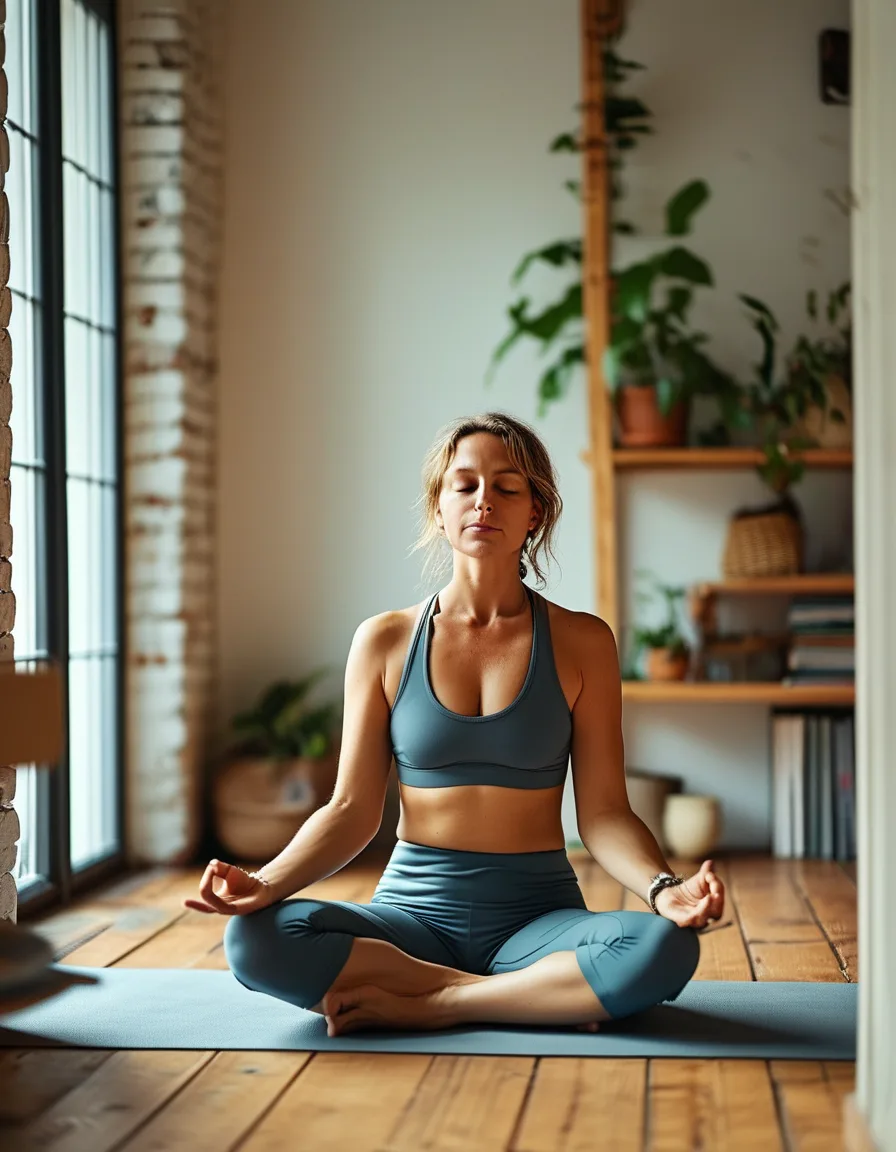
Yes, more than most people expect — natural light has real, documented effects on mood and alertness, both relevant to a focused yoga practice. A dim, enclosed corner can make practice feel more like a chore, while a space with even indirect natural light tends to support more consistent, enjoyable sessions.
If a genuinely well-lit spot isn’t available, a warm (not harsh) lamp positioned to avoid glare during poses is a reasonable substitute, better than practicing in true dimness.
What Nobody Tells You About Wall Proximity
Here’s an underused detail: keeping your mat near a wall (not necessarily against it) gives you a spotting option for balance poses and inversions that a middle-of-the-room setup doesn’t. Many small-space practitioners avoid balance work entirely because they don’t have a stable reference point nearby — positioning the mat with a wall within arm’s reach solves this without needing more floor space.
This is especially useful for poses like tree pose or practicing toward an eventual headstand, where a wall becomes a genuine safety and confidence tool, not just a space-saving choice.
Should the mat placement stay fixed or move around?
Consistent placement in the same spot builds practice habit more reliably than a mat that moves depending on the day — the environmental cue of walking into ‘the yoga spot’ supports consistency the same way a dedicated desk supports focused work.
For genuinely multi-use small spaces, a mat that rolls out in the exact same spot each time (even if stored elsewhere between sessions) captures most of this consistency benefit without needing permanently dedicated square footage.
FAQ: Small Space Yoga Mat Placement Questions, Answered
Can I practice yoga in a space with low ceilings?
Yes for most poses, though be mindful during any overhead-arm sequences or arm balances near light fixtures or ceiling fans.
Does carpet work as well as hard flooring for a yoga mat?
A mat still helps for grip and cushioning on carpet, though very plush carpet can make balance poses slightly less stable than a firmer surface.
Is it worth measuring the space before buying yoga props?
Yes — small spaces benefit from compact or foldable props (blocks, straps) chosen with the actual available clearance in mind, rather than standard studio-sized equipment.
TL;DR:
- Aim for at least 6x4 feet of genuinely clear space, checked by lying down with limbs extended
- Natural light meaningfully supports practice consistency and mood, not just aesthetics
- Keeping the mat within arm’s reach of a wall enables safer balance and inversion practice
- Consistent mat placement builds practice habit better than a mat that moves around daily
The right spot isn’t just open floor — it’s light, clearance, and a wall within reach, all working together.
See It in Motion
Seen here: UPF 50+ Racerback Yoga Tank Top — shop it on bubblelime.com
Keep Reading
This article is for general informational and styling purposes only. Fit, sizing, and product availability may vary.