The Home Yoga Corner That Actually Gets Used (vs the One You Set Up Once)
Quick Answer: Yoga corners that get used long-term share one trait: the mat is already out, visible, and requires zero setup. Corners that require unrolling, moving furniture, or fetching props from another room get used for about a week before habit collapses.
You picked the corner with the best light. Bought the mat, maybe a small shelf for props. For the first week you used it daily. Then it became a place where a laundry basket lives. The décor wasn’t the problem — the setup step was.
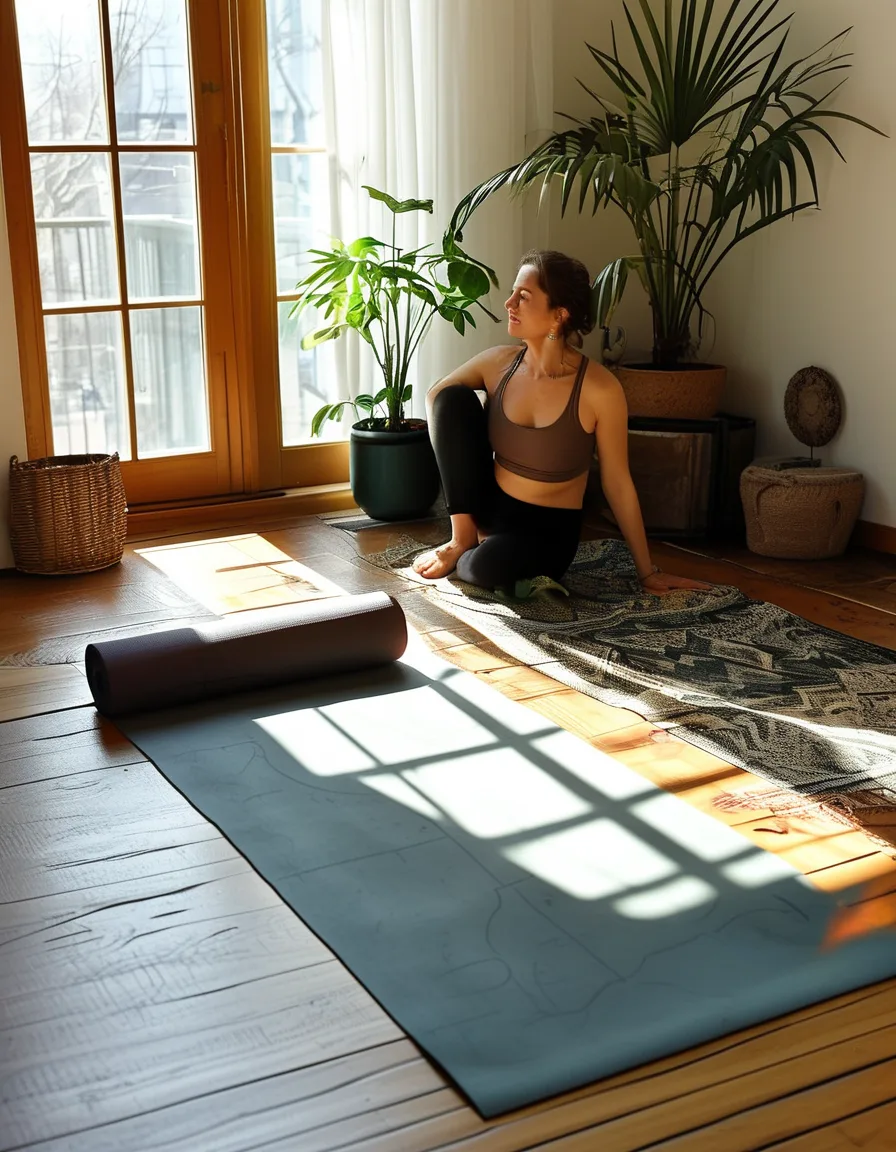
Why do beautifully set-up yoga corners stop getting used?
Because ‘beautiful’ and ‘zero-friction’ are different design goals. A corner that looks good in photos often requires rolling out a mat, moving a chair, or fetching blocks before you can start — three small steps that are enough to lose the habit on a tired day.
The corners that survive past month one are visually plainer but functionally instant: mat permanently unrolled, props already in reach.
What does a genuinely low-friction yoga space require?
Just 3 things always in place: a mat that stays down (or is visible enough that putting it down takes 3 seconds), one prop within arm’s reach (block or strap), and a clear boundary — even 4x6 feet marked by a rug edge is enough for your brain to register ‘this is the spot.’
Everything beyond that — shelving, plants, a speaker — is decoration, not function. Nice to have, doesn’t move the needle on whether you actually practice.
5 Mistakes Everyone Makes Setting Up a Home Practice Space
1. Choosing the ‘good’ room over the used room. A guest room with perfect light beats nobody if you never walk past it — pick a space in your daily path instead.
2. Storing the mat rolled up in a closet. Every closed door between you and the mat is a decision point where ‘later’ wins.
3. Overdecorating before testing use. Buy the plants after 30 days of consistent use, not before — decorating first often substitutes for actually practicing.
4. No visual trigger. A space that looks identical to the rest of the room gets ignored the same way. Even a small rug changes that.
5. Requiring silence or privacy that’s rare in your house. Design for your actual noise level, not an ideal one — waiting for perfect quiet means waiting forever.
Does room size actually matter for a home practice space?
Less than expected. 6x4 feet is enough for a full mat plus arm room in most poses. Micro-spaces (a cleared 4x4 corner) work fine for seated practice, restorative work, and most standing sequences if you skip wide-arm poses.
The binding constraint is almost never square footage — it’s whether the space is claimed permanently or shared with something else that displaces it (a home office desk, a guest bed).
FAQ: Home Yoga Space Questions, Answered
Do I need a dedicated room for a home yoga practice?
No — a permanently claimed corner works as well as a full room for consistency. What matters is that nothing else regularly takes over that spot.
Should I leave my mat rolled out all the time?
If space allows, yes. Visible + already-down removes the single biggest friction point between intending to practice and actually starting.
How do I keep a shared-room yoga corner from getting cluttered?
Set one hard rule — nothing gets set down on the mat itself, ever — and enforce it the same way you’d protect any other dedicated surface in the house.
TL;DR:
- A corner used long-term needs zero setup steps, not perfect décor
- Keep the mat visible and (if possible) always unrolled
- Pick a space in your daily path over the ‘nicest’ room
- 6x4 feet is enough — square footage isn’t the real constraint
Design for the tired-Tuesday version of yourself, not the motivated-Sunday version — that’s the corner that actually gets used.
See It in Motion
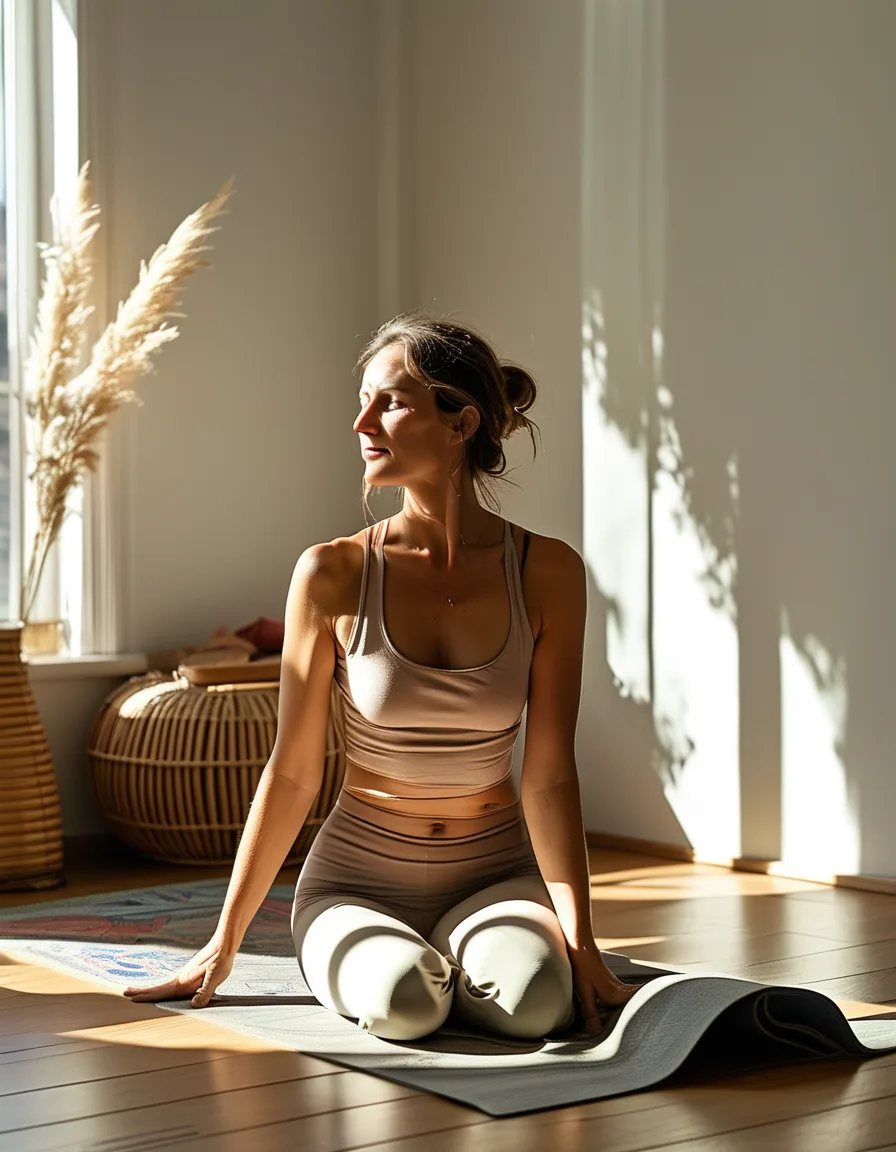
Seen here: Racerback Tank Top - White — shop similar styles on bubblelime.com
Keep Reading
This article is for general informational and styling purposes only. Fit, sizing, and product availability may vary.