Why Scent Does More for a Home Yoga Corner Than Any Amount of Decor
Quick Answer: A home yoga corner fails to feel distinct because it shares every sensory input with the room around it - same light, same sound, same smell. Scent is the cheapest and most effective of those to change, and it works as a state cue: a specific smell used only for practice becomes a signal that shortens the time it takes to settle. Choose one scent, use it exclusively for practice, and introduce it before you unroll the mat rather than during.
You have moved the plant, changed the cushion, and bought a better mat.
It still feels like doing yoga next to the sofa - because in every way that matters to your attention, it is.
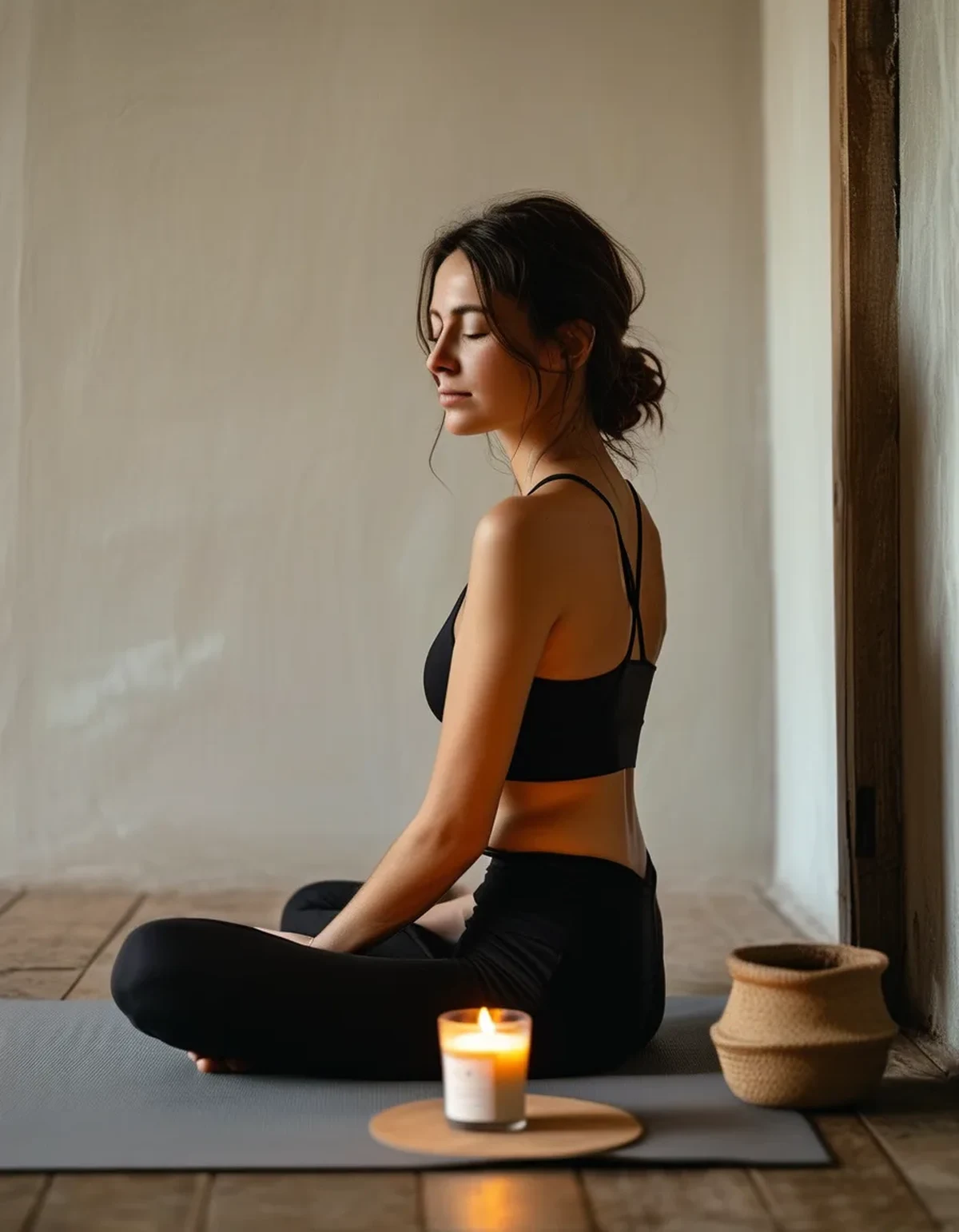
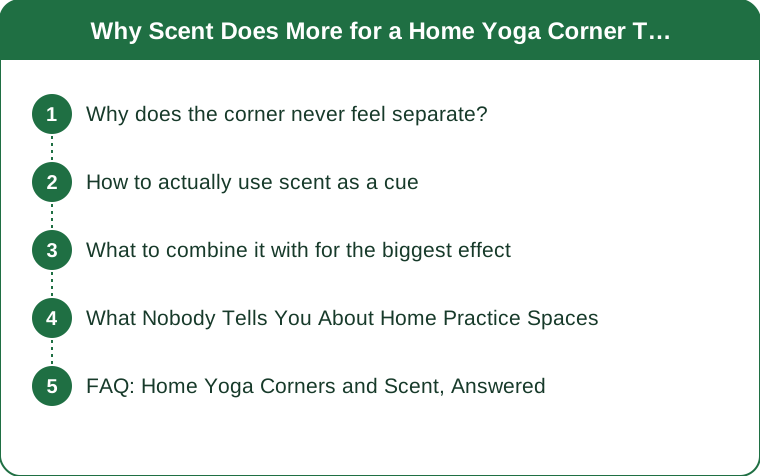
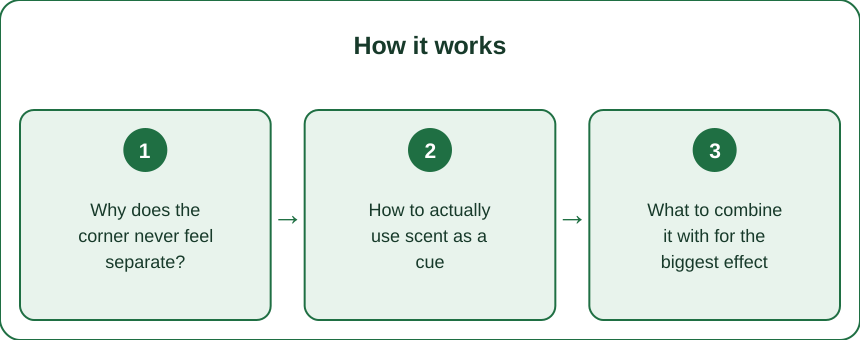
Why does the corner never feel separate?
A studio changes every sensory input at once. Different light, different acoustics, different smell, different floor underfoot, and no visible reminders of anything else you are meant to be doing.
A home corner changes almost none of them. The same overhead light, the same room sound, the same domestic smell, and a full view of the laundry - which is why it takes so much longer to settle at home than in a class.
Visual changes are the weakest lever because your brain already has a complete model of that room. Adding a cushion does not overwrite it.
Scent bypasses that entirely. Smell has an unusually direct route to memory and emotional processing, and a distinct smell in a familiar room is one of the few changes that genuinely registers as different.
It is also the cheapest change available. A candle, an oil, or an incense stick costs a fraction of any furniture, and unlike furniture it does not need to live in the corner permanently.
And it is portable, which matters more than it sounds. The same scent works in a hotel room, a spare bedroom, or a corner you have had to move - the cue travels with you rather than being tied to a location.
How to actually use scent as a cue
Pick one scent and use it only for practice. Exclusivity is the entire mechanism. A scent you also burn while cooking or reading will not function as a signal, because it is not associated with anything specific.
Introduce it two to three minutes before you start, not as you begin. The point is to change the room before you enter the practice, so that unrolling the mat happens in an already-different space.
Keep it faint. Strong scent is distracting during breathing-focused practice and can trigger headaches. You want it noticeable when you walk in and barely perceptible ten minutes later.
Consistency beats quality. The same modest candle used every session outperforms a rotating collection of expensive oils, because the association is what does the work rather than the fragrance itself.
Match the scent to the practice if you use more than one. Something bright and citrus-forward for morning flows, something warmer for evening restorative sessions - two cues rather than one, each used exclusively.
Ventilate between sessions so the room resets. A scent that lingers permanently stops being a cue and becomes background, which defeats the purpose.
And avoid anything that irritates. If you are sensitive to fragrance, a small dish of dried herbs, a piece of cedar, or even a specific tea brewed only before practice works on exactly the same mechanism without the airborne load.
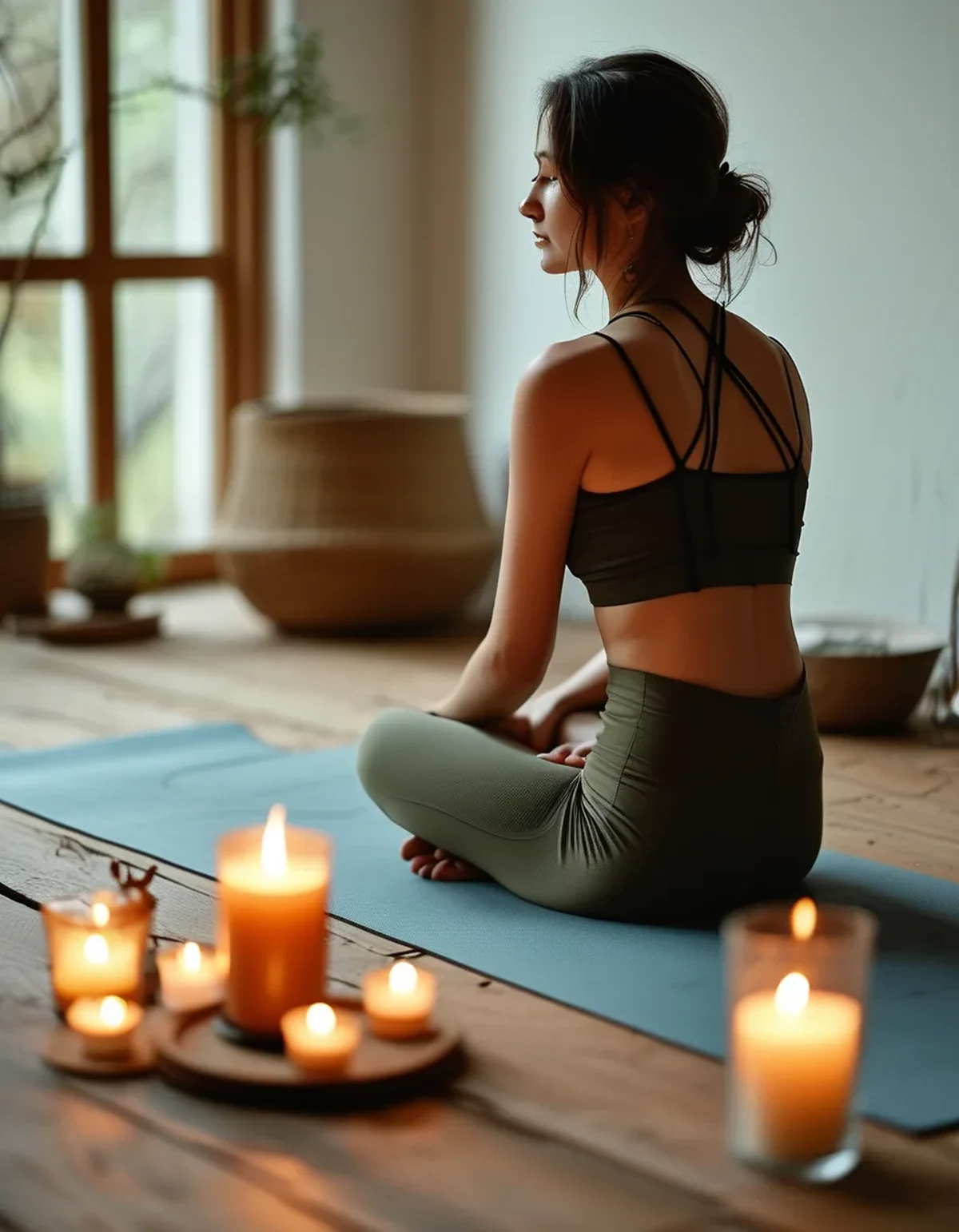
What to combine it with for the biggest effect
Sound is the second cheapest input to change. The same short piece of music or the same ambient track before every session compounds with the scent cue, and headphones separate the space acoustically in a way nothing else in a shared home can.
Lighting matters more as the days shorten. A single warm lamp at floor level rather than an overhead light changes the character of a room dramatically, and this is the season it starts being relevant for evening practice.
Underfoot texture is underrated. A rug that lives only in that corner, or simply a mat with a distinct surface, gives your body a physical signal that this is the practice space.
Facing a different direction changes the visual field entirely without moving any furniture. Practising facing a window or a blank wall rather than into the room removes most of the domestic reminders.
Put the phone in another room, not face down. This is the single largest attention change available and it costs nothing, and it is the one people substitute a decor purchase for.
Layer two or three of these rather than all of them. A routine with five setup steps becomes a barrier to practising at all, and the corner that gets used beats the corner that is perfectly appointed.
And keep the setup under sixty seconds. Light the candle, put on the track, close the door. Any longer and the ritual starts competing with the practice for the time you actually have.
What Nobody Tells You About Home Practice Spaces
The corner that gets used is rarely the prettiest one. It is the one where the mat is already accessible and the setup takes under a minute. Convenience beats atmosphere every time.
Storing the mat rolled in a cupboard adds a real barrier. Leaving it out, or in a basket at the edge of the corner, measurably increases how often people practise - which is unglamorous and completely consistent with how habits work.
Scent cues take about two weeks to establish. The first few sessions it is just a nice smell. Somewhere around session six to ten it starts producing the settling response on its own.
The cue also works in reverse. Once established, using that scent while doing something stressful weakens it - which is a real argument for keeping it exclusive rather than a superstition.
Sharing the space with someone working from home is the hardest case, and scent is one of the few cues that can be established and removed within minutes rather than requiring a permanent claim on the room.
A corner in a cold room needs the heating cue too, and as autumn arrives, turning a small heater on ten minutes before practice becomes part of the same pre-session ritual - a temperature cue as much as a comfort measure.
And the corner will drift back into storage if you do not use it for a fortnight. This is normal and reversible, and re-establishing the scent cue is a faster route back than reorganising the space again.
FAQ: Home Yoga Corners and Scent, Answered
Why does my home yoga corner not feel like a practice space?
It shares every sensory input with the room around it - light, sound, smell, and view. Visual changes alone rarely overwrite an existing mental model of a familiar room.
Does scent actually change anything?
Used exclusively for practice, it becomes a state cue that shortens the time it takes to settle. Exclusivity is the mechanism - a scent you also use while cooking will not work.
When should I introduce the scent?
Two to three minutes before you start, so the room is already different when you unroll the mat. Keep it faint - strong fragrance distracts during breath-focused practice.
How long before it works?
About two weeks, or roughly six to ten sessions. Before that it is just a pleasant smell; after that it starts producing the settling response on its own.
What if I am sensitive to fragrance?
Dried herbs, a piece of cedar, or a specific tea brewed only before practice work on the same mechanism with no airborne fragrance load.
What else is worth changing?
Sound through headphones, a warm floor-level lamp instead of overhead light, and putting the phone in another room. Layer two or three, not all of them.
How long should the setup take?
Under sixty seconds. A longer ritual becomes a barrier to practising at all, and the corner that gets used beats the corner that is perfectly arranged.
TL;DR:
- Home corners fail because they share light, sound, and smell with the room around them - decor does not overwrite that.
- Scent is the cheapest sensory change and works as a state cue, provided you use it only for practice.
- Introduce it two to three minutes before starting, keep it faint, and ventilate between sessions.
- Layer it with headphones, a floor-level lamp, and the phone in another room - two or three cues, not five.
- Keep the whole setup under sixty seconds, or the ritual starts competing with the practice.
It takes roughly two weeks for the cue to start working on its own. Consistency matters more than the fragrance.
See It in Motion
Seen here: High Waist Printed Bootcut Yoga Pants with Pockets — shop it on bubblelime.com
Keep Reading
This article is for general informational and styling purposes only. Fit, sizing, and product availability may vary.