Why That Home Yoga Corner You Set Up Gets Used Less and Less Every Week
The corner still looks exactly like it did on setup day — mat rolled out, props nearby — and somehow the actual practice happening in it has quietly dwindled from daily to occasional. The space rarely changed; something in the routine around it did.
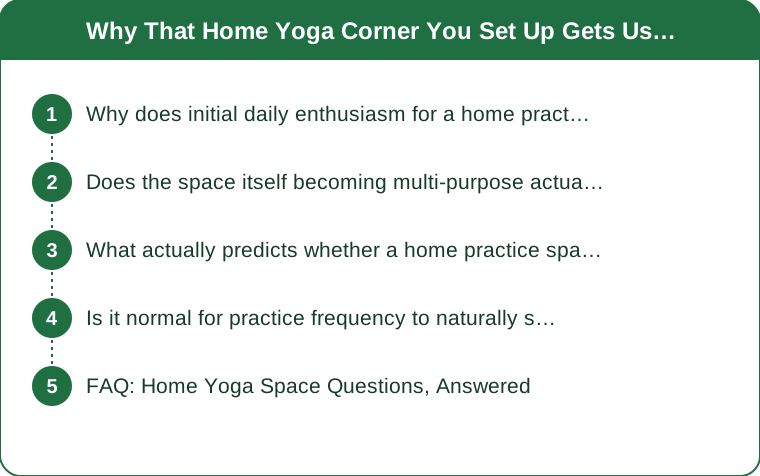
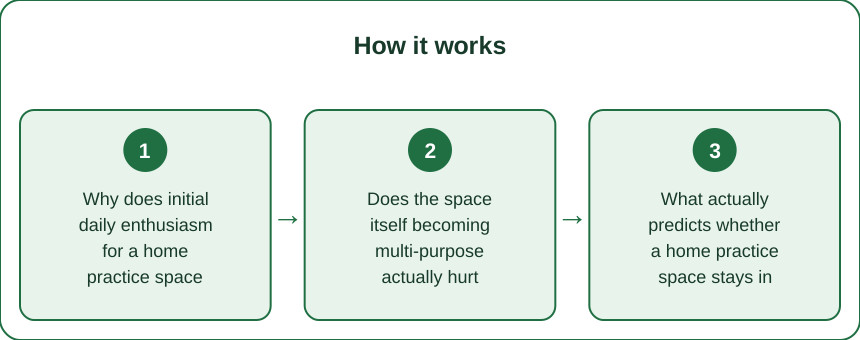
Why does initial daily enthusiasm for a home practice space fade so predictably?
The novelty of a new space provides motivation independent of the practice itself in the first few weeks, and once that novelty wears off, whatever structure (or lack of structure) was actually supporting consistent practice becomes the real determining factor — a space alone was never going to sustain the habit indefinitely on its own.
Does the space itself becoming multi-purpose actually hurt consistency?
Yes, often significantly — a yoga corner that gradually becomes storage overflow, a place for laundry to pile, or shared with other activities loses its specific psychological association with practice, making it require more active decision-making to ‘clear and set up’ before each session instead of simply stepping onto an already-ready mat.
What actually predicts whether a home practice space stays in consistent use?
A specific scheduled time tied to an existing daily anchor (right after morning coffee, right before bed) rather than a vague ‘whenever I have time’ intention is one of the strongest predictors — habits anchored to an existing routine point survive novelty fading far better than habits relying on finding time.
A space kept genuinely single-purpose, with the mat left out and ready rather than rolled up and stored, also reduces the friction that erodes consistency over time.
Is it normal for practice frequency to naturally settle lower than the initial enthusiasm suggested?
Yes — a realistic, sustainable practice frequency is often genuinely lower than initial enthusiasm suggests, and settling into 3-4 consistent sessions a week is a perfectly legitimate outcome, very different from the corner being abandoned entirely. The concerning pattern is a steady decline toward zero, not a settling into a lower but steady rhythm.
FAQ: Home Yoga Space Questions, Answered
How small can a home yoga space be and still work well?
A space just large enough for a mat with a few feet of clearance on each side is genuinely sufficient — size isn’t usually what determines whether the space stays in use.
Does keeping the mat rolled out versus stored away really matter that much?
Yes — reducing the setup friction to zero (mat already out and ready) measurably increases the odds of using the space on lower-motivation days.
Is it worth moving the yoga space if it’s not working in its current spot?
If the space has become multi-purpose or inconvenient, relocating it somewhere genuinely dedicated and low-friction is often more effective than trying to force consistency in a compromised spot.
TL;DR:
- Initial daily enthusiasm fades once a space’s novelty wears off — habits need structure to survive past that point
- A space that gradually becomes multi-purpose loses the specific association that supported consistent use
- Anchoring practice time to an existing daily routine predicts consistency far better than a vague ‘whenever’ intention
- Settling into a lower but steady frequency is a normal outcome, different from a steady decline toward zero
The corner didn’t fail — it just needed an anchor and zero setup friction to keep earning its spot in the week.
See It in Motion
Seen here: High Waist Yoga Leggings with Side Pockets — shop it on bubblelime.com
Keep Reading
This article is for general informational and styling purposes only. Fit, sizing, and product availability may vary.