Why Your Home Yoga Corner Gets Abandoned After Week One (And the Fix That Actually Sticks)
Quick Answer: Home yoga corners get abandoned because they’re set up as a static display rather than a low-friction habit trigger — a rolled-up mat in a closet requires a decision every single time, while a mat left permanently unrolled removes that daily decision entirely.
Week one: beautiful corner, candle, folded blanket, freshly rolled mat. Week three: the mat’s back in the closet and the corner holds a laundry basket. This is one of the most common home wellness patterns, and it has a specific, fixable cause.
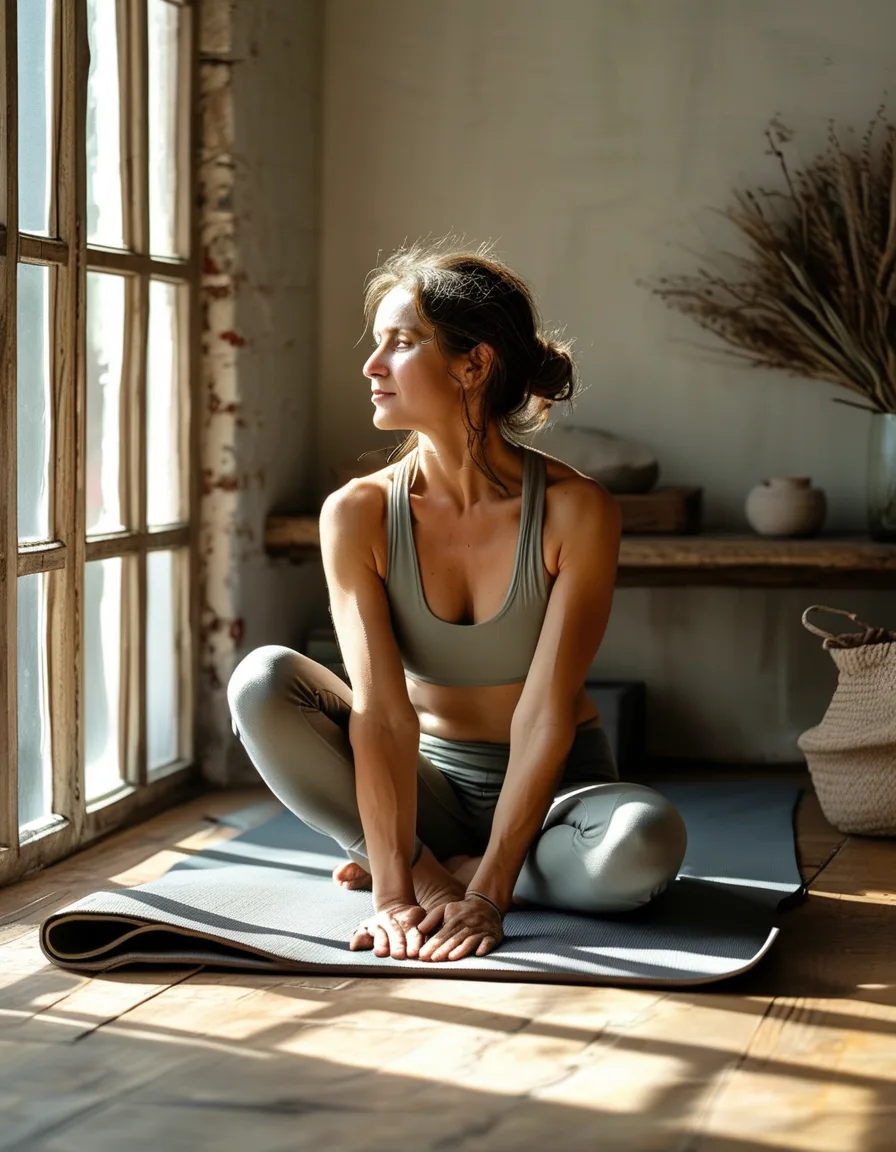
What’s the real reason yoga corners get abandoned so quickly?
The core issue is decision fatigue disguised as a space problem. A rolled, put-away mat requires you to actively decide to practice, retrieve the mat, and set up before you even start — three small barriers stacked before the actual habit. A permanently unrolled mat removes all three, leaving just ‘step onto the mat,’ which is a dramatically lower bar.
Does the aesthetic setup (candles, plants, decor) actually matter?
Less than people assume, and sometimes it works against consistency. An elaborate, precious-feeling setup can create subtle pressure to have a ‘complete’ session worthy of the space, discouraging the genuinely valuable 5-minute practices that build the habit in the first place. A plain mat that’s simply always there, ready for even a rushed 5 minutes, outperforms a beautifully staged corner used only for full 60-minute sessions.
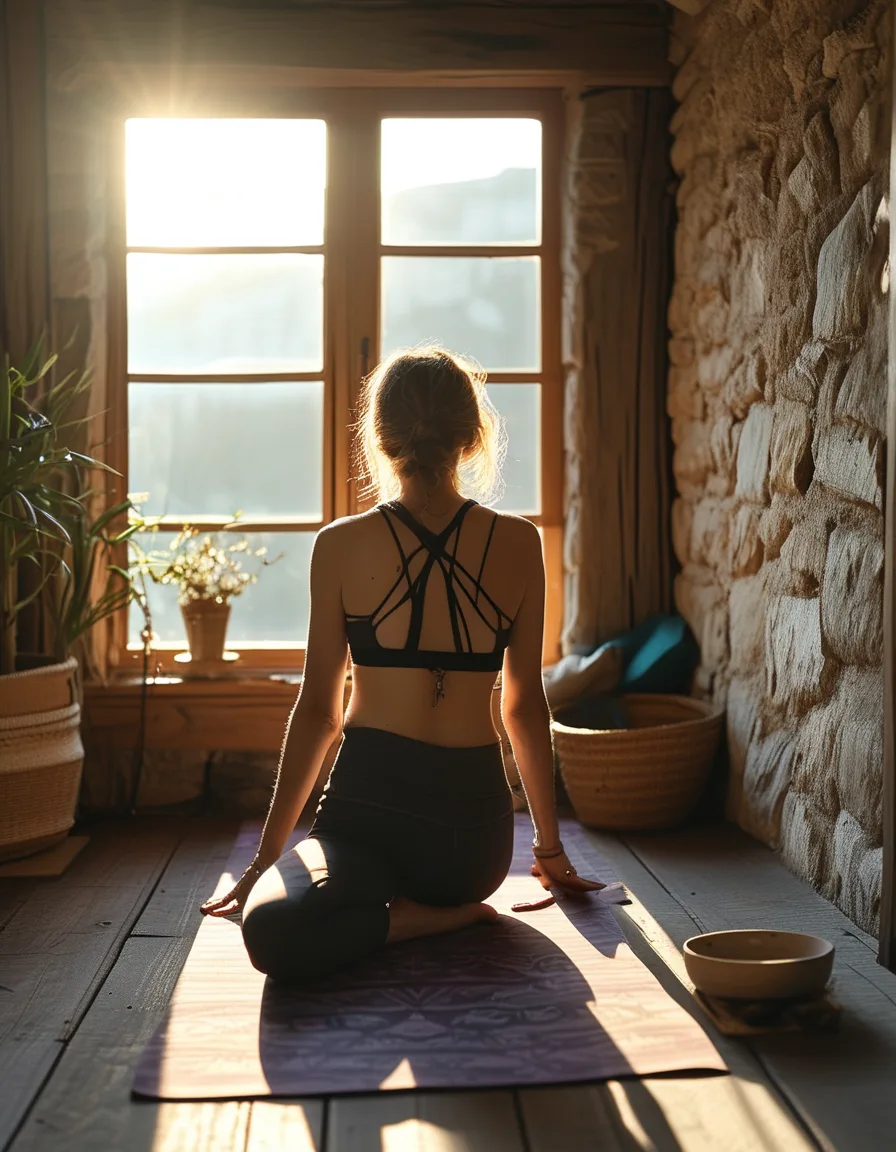
What does ‘the corner that actually gets used’ look like in practice?
Almost always smaller and plainer than people expect — a mat that stays unrolled against a wall, in a spot you pass daily (not a spare room you have to detour to), with zero setup required. It doesn’t need to look Instagram-ready; it needs to remove every possible excuse between you and 60 seconds on the mat.
What are the specific fixes that bring an abandoned corner back?
- Leave the mat permanently unrolled, even if it means walking around it sometimes — the visual reminder and zero setup cost is worth the minor inconvenience
- Move it to a high-traffic spot, not a spare room or closet — visibility during your normal daily path matters more than a dedicated ‘room’
- Give yourself permission for 3-5 minute sessions, not just full practices — a corner used for quick stretches daily beats one used for full sessions twice a month
- Remove the pressure to keep it ‘staged’ — a slightly rumpled mat that’s used constantly beats a perfectly folded one that isn’t touched
FAQ: Home Yoga Space Questions, Answered
Is it bad to have your yoga mat visible with other household clutter nearby?
Not at all — visibility and low friction matter far more than a pristine, isolated setup; a mat next to a bookshelf that gets used daily beats an isolated shrine that doesn’t.
How small can a functional home yoga corner actually be?
A single mat’s width against any wall is genuinely enough — the space itself was rarely the real constraint, the setup friction was.
Should you roll the mat back up if guests are coming over?
Sure, temporarily — the goal is removing friction for your daily default state, not banning any flexibility for occasional exceptions.
TL;DR:
- Home yoga corners fail from decision fatigue, not lack of space or bad location
- An elaborately staged corner can actually discourage the short, quick sessions that build real habits
- Leave the mat permanently unrolled in a high-traffic spot, not a spare room
- Give yourself explicit permission for 3-5 minute sessions, not just full practices
See It in Motion
Seen here: Bootcut Yoga Pants with Side Pockets — shop it on bubblelime.com
Keep Reading
This article is for general informational and styling purposes only. Fit, sizing, and product availability may vary.