Why Your Home Yoga Corner Feels Different at 6am Versus 6pm
Quick Answer: The same yoga corner can feel energizing in morning light and gloomy in the evening simply because natural light direction and intensity shift dramatically through the day. A layered lighting plan — natural light for morning, a warm lamp for evening — keeps the space feeling right no matter when you actually practice.
That corner looked perfect when you set it up on a bright afternoon, and now your 6am practice happens in near-darkness while your 8pm session feels harsh under an overhead light.
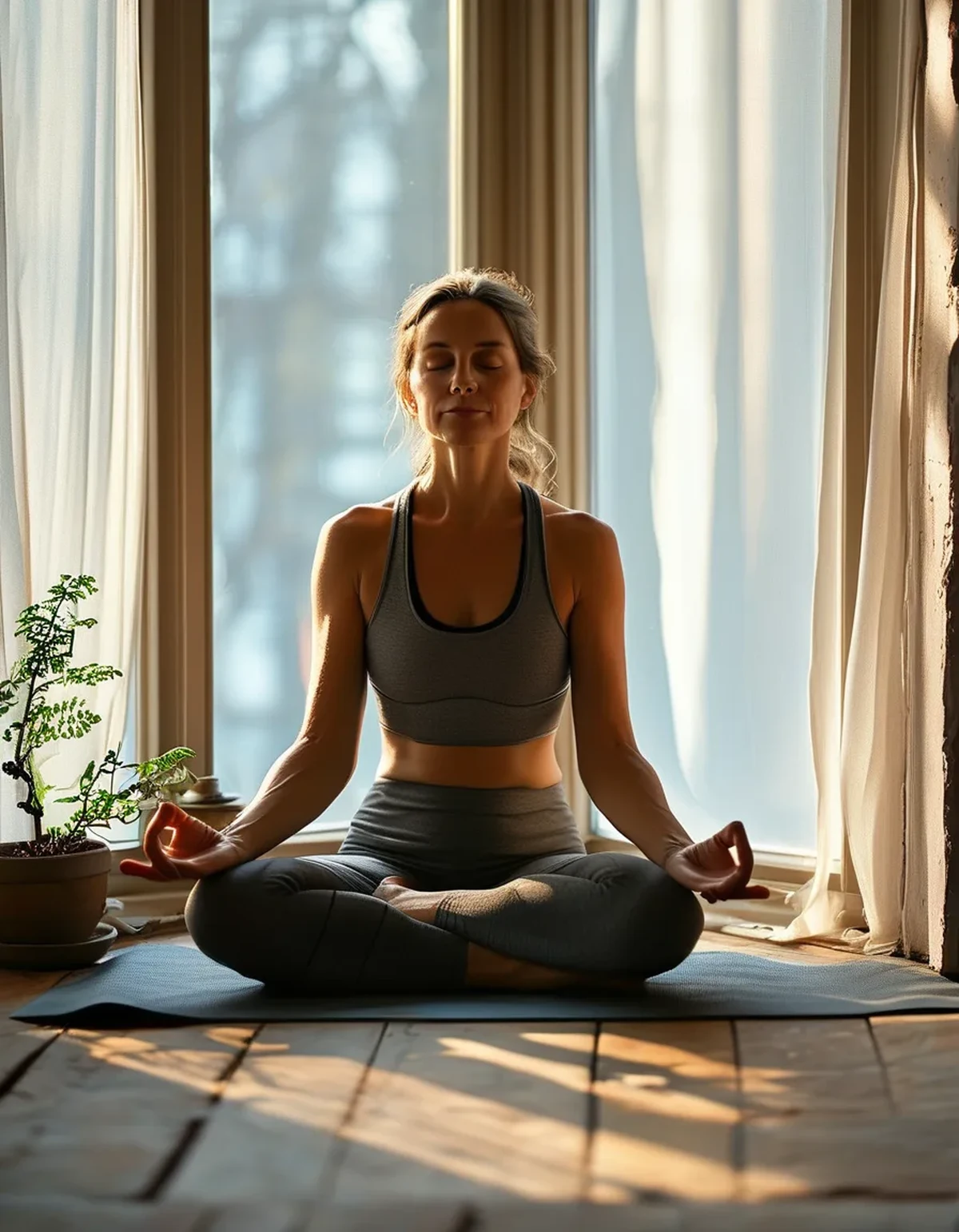
Why does the same physical space feel so different by time of day?
Natural light shifts in both intensity and color temperature throughout the day — cooler and dimmer in early morning, warm and golden in late afternoon, and absent entirely by evening, which means a space designed around one lighting condition can feel mismatched at other times. The space itself hasn’t changed, only the light filling it has.
What actually fixes an early-morning practice in the dark?
A soft, warm lamp (rather than a harsh overhead light) positioned to avoid direct glare gives enough visibility for safe practice without the jarring brightness of a ceiling fixture, which can feel especially unwelcome for an early, still-waking body. Avoid cool white or blue-toned bulbs for this purpose, since they can feel more alerting than calming at an hour when the goal is often to ease in gently.
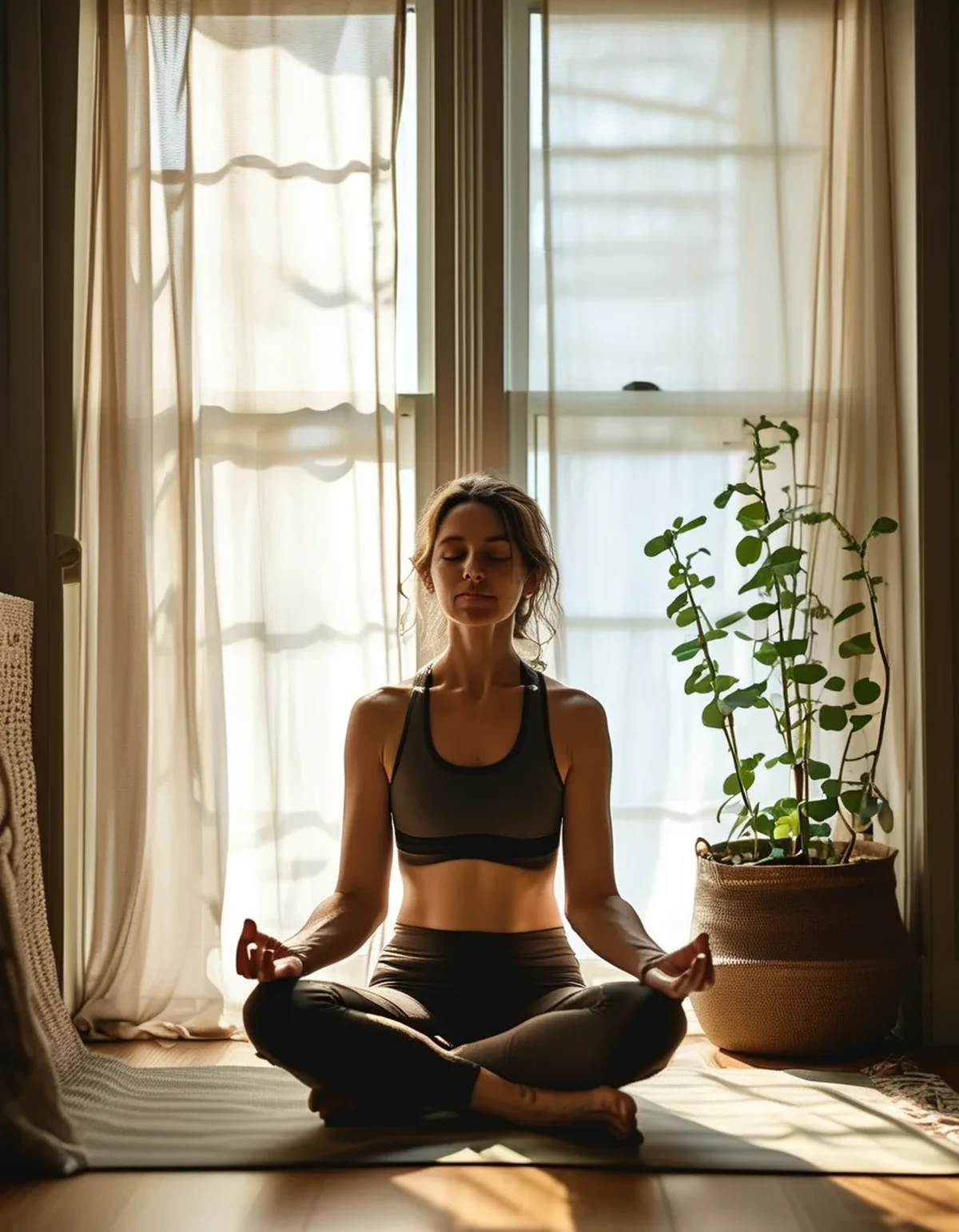
Does evening practice need something different from morning setup?
Yes — evening practice benefits from dimmer, warmer light that supports winding down rather than the brighter, energizing light that suits a morning routine, so a single fixed overhead light rarely serves both moods well. A simple floor or table lamp on a dimmer, used instead of overhead lighting in the evening, adapts the same physical space to a different practice mood.
Is natural light placement something to plan for at setup, or just work around later?
Planning for it at setup saves significant frustration — positioning your mat area near a window that gets usable morning light, if morning practice is the priority, means less need for supplemental lighting solutions later. Match the space to your actual practice time, not just to whichever spot looked nicest during a furniture-arranging afternoon.
FAQ: Yoga Space Lighting Questions, Answered
Do candles work as a practical lighting solution, not just ambiance?
Candles alone usually don’t provide enough visibility for safe practice, especially for balance poses, so they work better as a mood addition alongside a proper light source rather than a replacement for one.
Should the lighting change based on the type of practice (restorative versus vinyasa)?
Dimmer, warmer light suits slower, restorative practice regardless of time of day, while more energetic practice can tolerate — and sometimes benefits from — brighter light even in the evening.
Is it worth investing in a smart bulb for this?
A smart bulb that adjusts warmth and brightness on a schedule removes the need to manually switch lighting setups between morning and evening sessions, which is a reasonable convenience investment for anyone practicing at inconsistent times.
TL;DR:
- Natural light’s intensity and warmth shift significantly across the day
- Warm, soft lighting suits early morning and evening practice better than overhead light
- Plan window and lamp placement around your actual practice time, not just aesthetics
- A dimmable or smart light adapts one space to multiple practice moods
A yoga corner that feels inconsistent isn’t a design failure — it just needs lighting that adapts the way your practice time does.
See It in Motion
Seen here: Super High Waist Embossed Yoga Leggings with Inner Pocket — shop it on bubblelime.com
Keep Reading
This article is for general informational and styling purposes only. Fit, sizing, and product availability may vary.