Why the Lighting in Your Home Yoga Space Might Be Sabotaging Your Practice
Quick Answer: Harsh overhead lighting keeps your nervous system in a more alert state, working against the calming intent of most yoga practice. Warm, indirect lighting (lamps rather than overhead fixtures, or natural morning/evening light) supports a more settled practice, especially for restorative or evening sessions.
You’ve got the mat, the props, the quiet corner — but something about practicing there feels more like a workout than a practice. Lighting is one of the most overlooked variables, and it’s also one of the easiest to fix.
Why does lighting affect how a yoga practice actually feels?
Bright, cool-toned overhead lighting mimics daylight office conditions, which your nervous system associates with alertness and task-focus — useful for productivity, counterproductive for the parasympathetic, settled state that yoga (especially slower or restorative styles) aims for. Warm, dim, indirect lighting sends the opposite signal, supporting the shift into a calmer state more readily.
What kind of lighting actually works better?
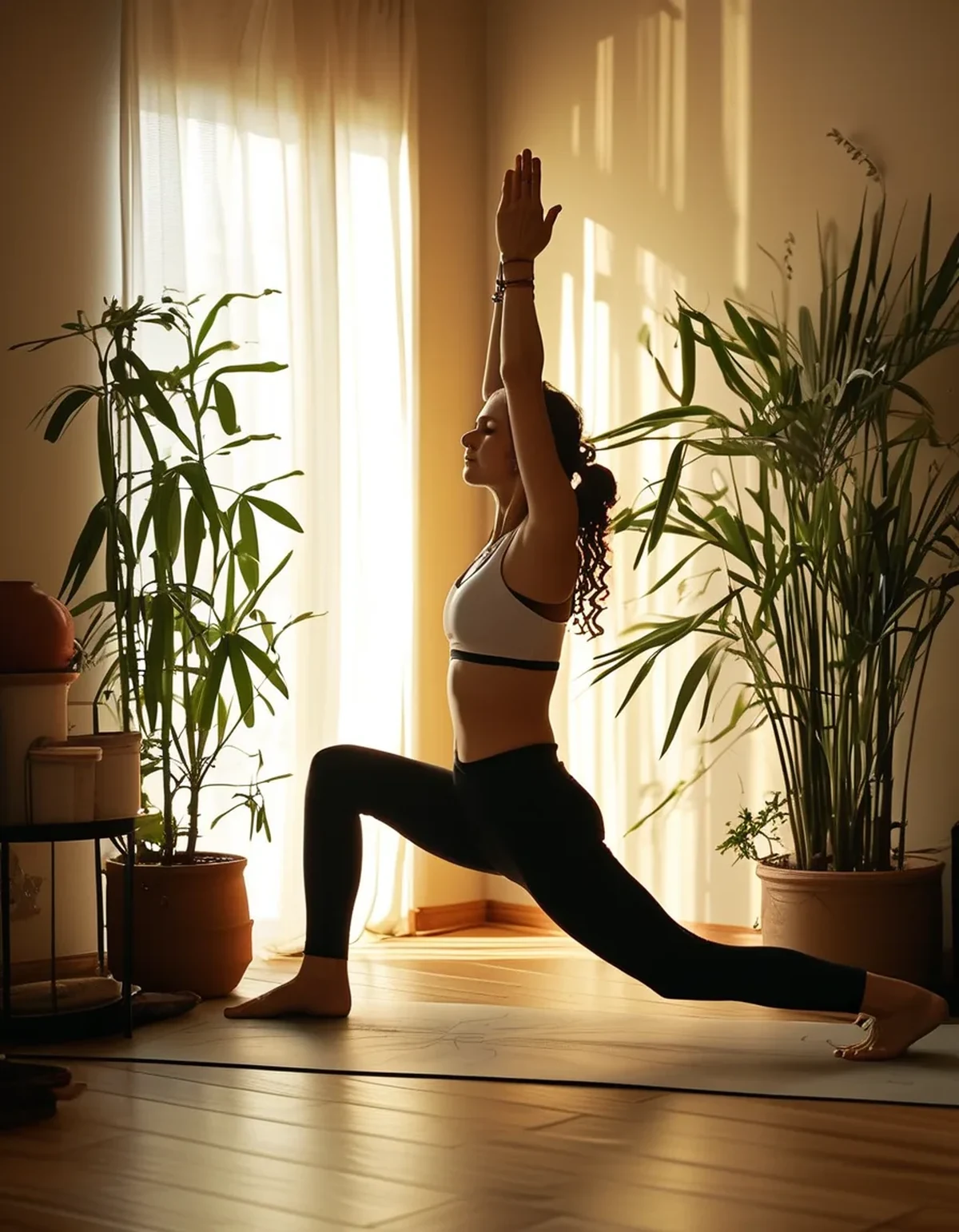
Warm-toned lamps placed at floor or seated eye-level, rather than bright overhead fixtures, mimic the softer light quality of candlelight or golden-hour sun without the harsh directional glare of a ceiling light. For morning practice, natural window light (even filtered through a curtain) tends to feel best; for evening practice, warm lamp light substitutes well once natural light is gone.
Does this matter differently for different types of practice?
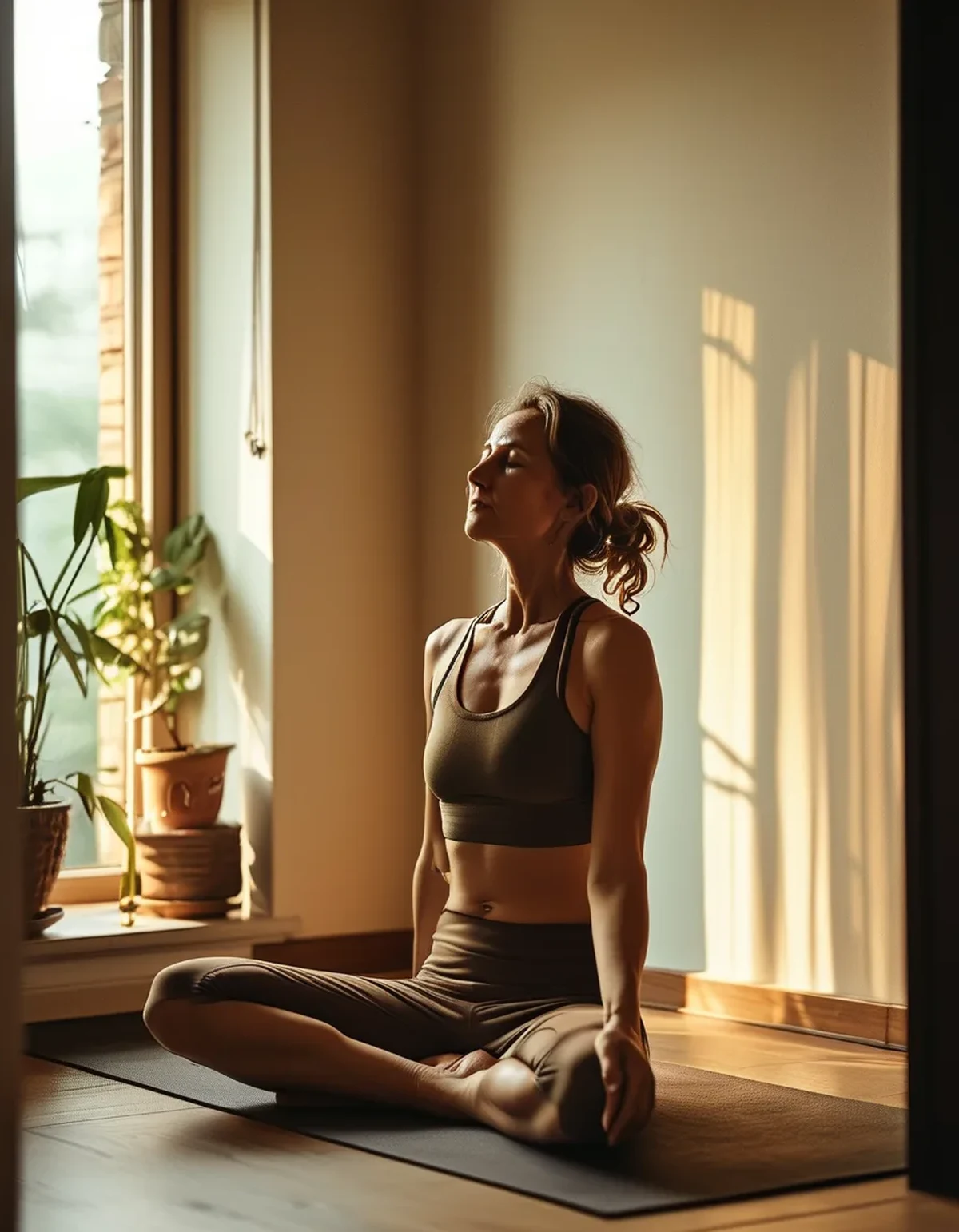
Yes — a vigorous vinyasa or power flow is less sensitive to lighting mood since the practice itself is already energizing. Restorative yoga, yin, or any practice ending in extended savasana benefits most from warm, low, indirect lighting, since the whole point of those styles is the nervous system settling that harsh light works against.
What Nobody Tells You About Lighting and Home Practice
Here’s what most home yoga guides skip entirely: many people who feel like they ‘can’t relax’ during home practice have never actually tested changing the lighting, defaulting to whatever bulb happens to be in the room. A five-dollar warm bulb swap or a single lamp addition is a remarkably low-effort change that shows up in how settled a practice actually feels — worth testing before assuming the issue is your space, your schedule, or your ability to focus.
FAQ: Yoga Space Lighting Questions, Answered
Do candles actually make a measurable difference, or is that just aesthetic?
Beyond aesthetics, live flame produces a flickering, warm-spectrum light that’s about as far as possible from harsh fluorescent overhead lighting — many practitioners genuinely find it supports a calmer state, though always with fire safety in mind near a mat.
Is natural light always better than artificial light for practice?
Generally yes for daytime practice, but very bright direct sunlight can be its own distraction (glare, heat) — filtered or indirect natural light tends to work best.
What if my only practice space has a single bright overhead light I can’t change?
A floor or table lamp added to the space, used instead of the overhead fixture during practice, solves this without any permanent changes to the room.
TL;DR:
- Bright overhead lighting keeps your nervous system in an alert state that works against calmer practice styles
- Warm, indirect lamp lighting supports the settled state that yin and restorative practice aim for
- Vigorous flows are less sensitive to this; slow practices benefit the most
- A simple lamp swap is a low-effort change worth testing before assuming the issue is deeper
See It in Motion
Seen here: Bootcut Yoga Pants with Side Pockets — shop it on bubblelime.com
Keep Reading
This article is for general informational and styling purposes only. Fit, sizing, and product availability may vary.